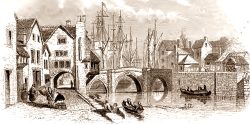
William Baker junior was baptised on 15 January 1817 in St Mary’s Church, the son of William, a currier and noted scientist, and Elizabeth, nee Criddle.
We know next to nothing of his childhood, besides that he would have been surrounded by his father’s natural history collections. Sketching flora and fauna would part of his father’s pursuits, so we can perhaps see William getting his start there.
The first mention of William jnr as an artist comes in 1838, when he would have been 21 years of age. A ‘Mr William Baker’ was awarded a silver medal by the Royal Academy for ‘the best drawing from the Antique’, described as ‘a Bridgwater man, a son of one of its inhabitants, distinguished alike for discretion, ability and integrity. Long may he live to rejoice in the professional reputation of his offspring, which having been so rapidly attained in a struggle with such numerous and able competitors, will doubtless be cultivated with that modest and unassuming assiduity, but which alone professional distinction can be sustained’.[1] This at least suggests that William was receiving professional training as an artist.
Two years later we learn of a major commission:
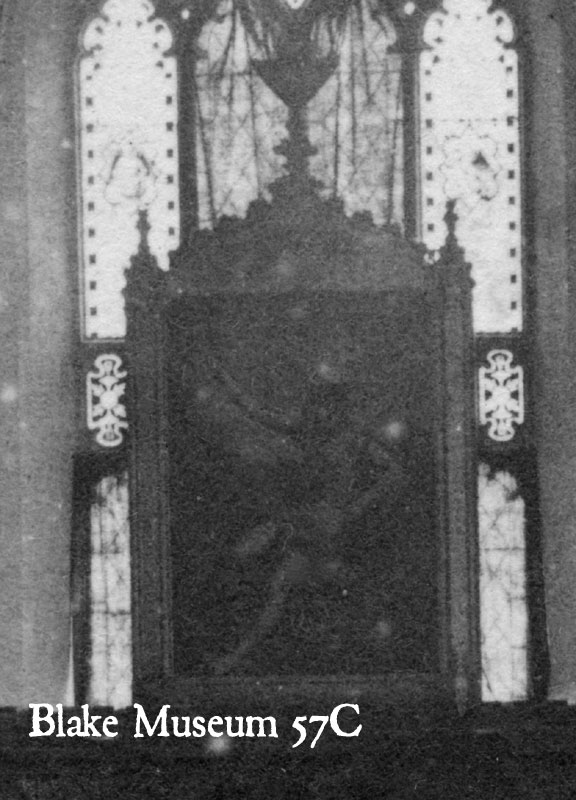
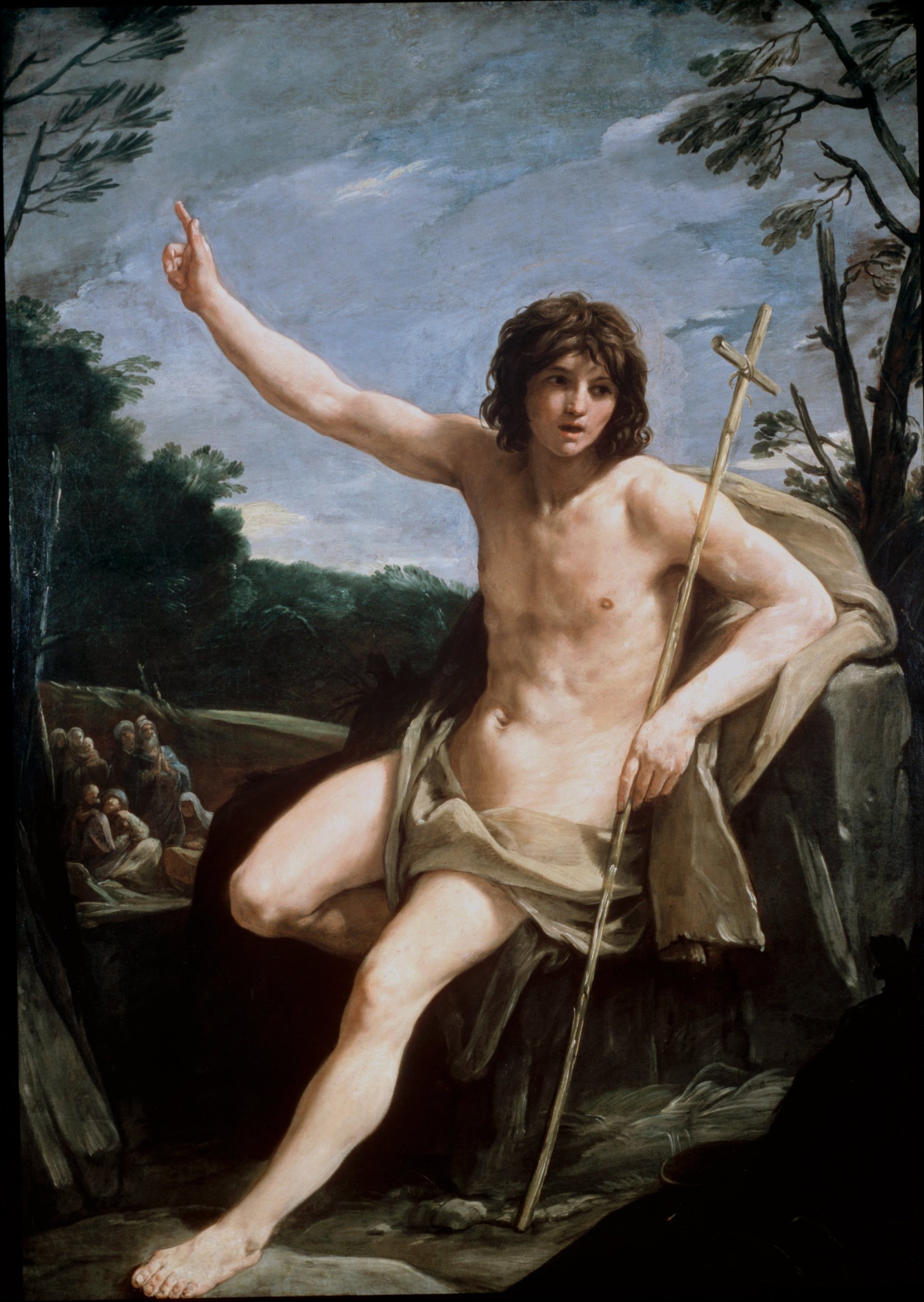
In our brief mention last week of the consecration of Trinity Church, we omitted to noticed what should not be forgotten the execution and presentation of the altar piece, by Mr W, Baker, eldest son of the well-known naturalist of this town; the subject is St John in the Wilderness, from an original painting by Guido, in the Dulwich Gallery, and is an admirable composition, one which marks the rise of an early exemplified talent that bids fair to rank the young artist ere long among the first historical painters of the day. The picture is enclosed in a very massive and richly gilt frame, and we much regretted that a bad light prevented an enjoyment of that full view of it which a gift so good in thought, and so excellent in performance, well deserved.[2]
This painting appears in pictures of the interior of the church in the mid-1860s. It disappears from the church in the following decades, and what happened to it is a mystery. For William to have copied this picture he would have had to have been living in London to make the many visits to the painting to sit in front of it to study its detail.
In 1843 we learn of another (lost commission):
We have seen a fine portrait of our respected townsman, Jonathan Toogood, esq, by a young artist (of great merit), a son of Mr William Baker. It is to be presented to the infirmary, by the subscribers and friends of the institution: it is a faithful likeness, and reflected great credit upon Mr Baker.[3]
This portrait of Toogood is also now lost.
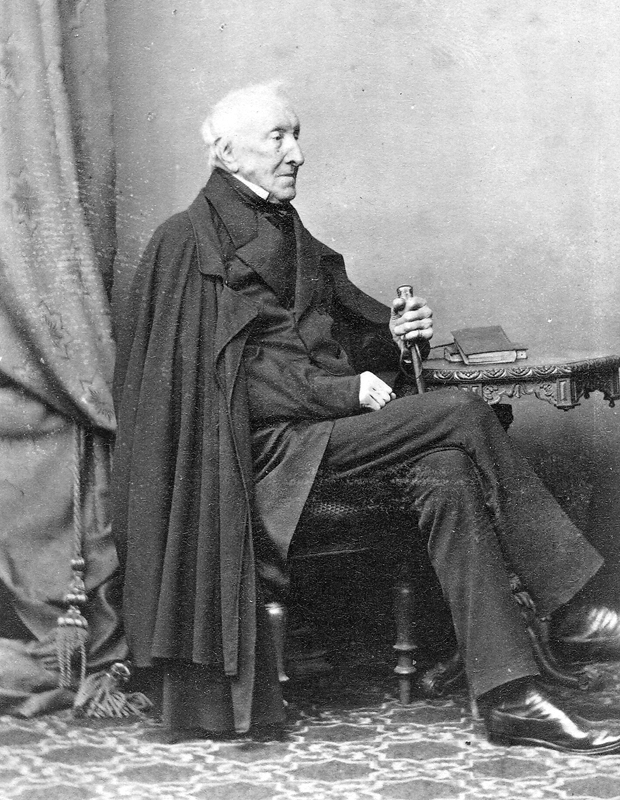
Although he would have spent time in London for copying and training, William kept local connections. He was married by licence to Mary Ann Axford at St John’s Eastover on 28 May 1850. His occupation given as ‘artist’, his residence given as St John’s. Mary Ann’s father was Frederick Axford, merchant, who owned the timber yard adjoining Bridge House.
In the 1851 census we find William and Mary Ann living at 6 Putney Street, in the parish of Bathwick in Bath. His occupation given as ‘artist painter’. Visiting them were Mary Ann’s father Frederick Axford ‘timber merchant and magistrate’, and his wife Elizabeth. Bath would have been a good place for William to have picked up wealthy clients for his portrait paintings.
About 1855 William and Mary Ann moved to London. We learn this from the 1861 census, when they were now living at 37 Southampton Low in Bloomsbury in London. His occupation was ‘artist’. Their children tell us of their move: Frederick William their 10 year old son, Amy, their 8 year old daughter are recorded as both in Bath. Then Hamilton, 6 years old, Edmund, 4 years old, Rodney, 2 years old– were all born in the parish of St Giles in Middlesex. They were wealthy enough to be able to employ two servants, a cook and a housemaid. Lodging with them was Henry Shaw, ‘architecture author’ and his housekeeper. This is probably Henry Shaw (1800–1873) the noted antiquary.
Although William’s activities are largely unknown in the 1850s, we have more information for the next decade, when he picked up further work in Bridgwater.
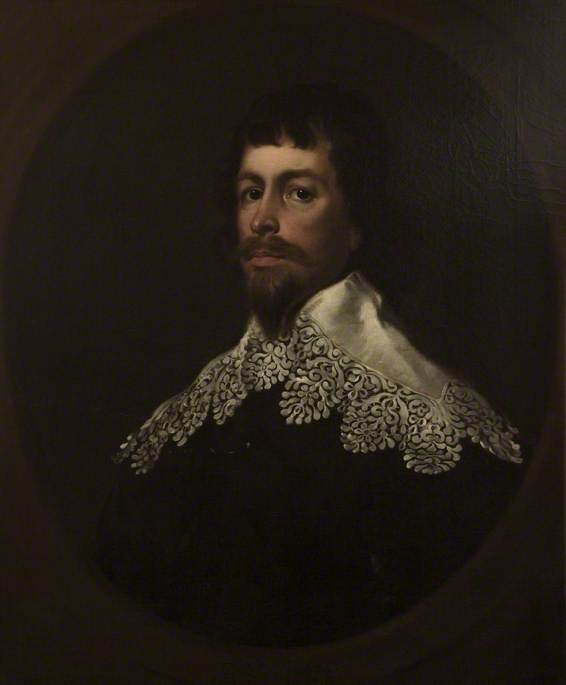
In 1862 William was commissioned by Henry Westropp, MP for Bridgwater, to copy a portrait supposedly (sadly probably incorrectly) of Admiral Robert Blake, painted by ‘Adrian Hanneman (a pupil of Vandyck’s) is at Narford Hall, Norfolk, the seat of the Fountaine Family’.
In 1864, he was selected by the Town Council of Bridgwater to paint a portrait of the Mayor, William Browne. The subcommittee had written to several artists, and were willing to pay 100 guineas, without a frame. The secretary reported that the nett amount in hand was £100, and that the frame would cost £20.[4]
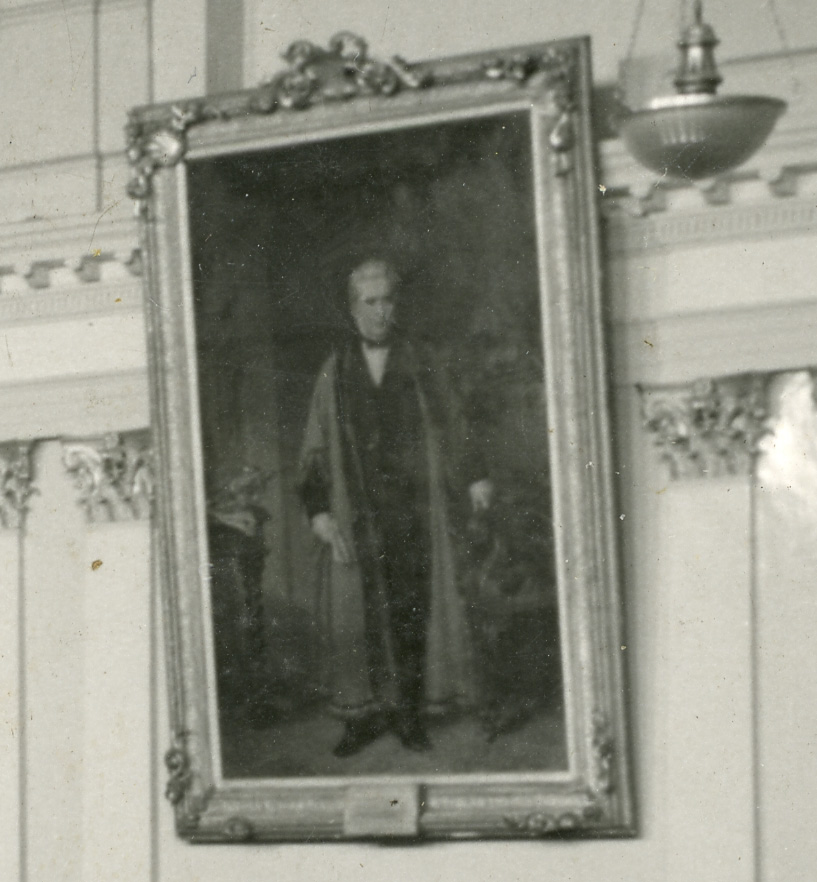
In response to the town’s honouring him, Browne also commissioned Baker:
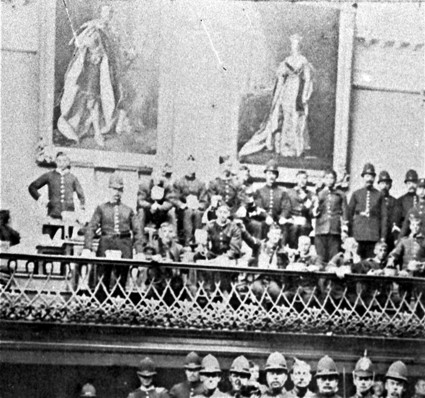
the mayor of Bridgwater, J. Browne, Esq., in acknowledgement of the testimonial and respect paid him last week by the inhabitants of Bridgwater, in presenting him with a full-length likeness of himself, has commissioned Mr Baker, the eminent artist, to take copies of the portraits of the Queen and late Prince Albert from those painted by Winterhalter, to be hung in the new Town Hall.[5]
These were impressive portraits and we see them in pictures of the Town Hall. Again, like the Holy Trinity altarpiece and the infirmary portrait of Toogood, we have no idea what happened to them.

_-_Prince_Albert_(1819-61)_-_RCIN_404387_-_Royal_Collection.jpg)
_-_Queen_Victoria_(1819-1901)_-_RCIN_404388_-_Royal_Collection.jpg)

In 1867 William seems to have painted Richard Trew (1793–1874), Mayor of Axbridge.
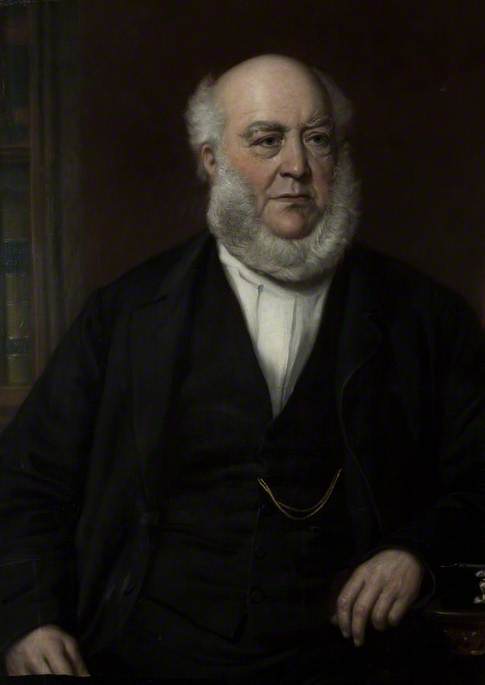
At the 1871 census, William and his family were now living at No.2 Herbert Terrace in Clevedon, Somerset, which seems to have been a lodging house. Willia’s occupation given as ‘Historical Portrait Painter’, which indicates that most of his work will have been copying old masters and historical portraits, so rich clients could have copies for their homes. Most interestingly, William’s son Frederick William Baker, now 19, is described as a Watercolour Painter. With them at this time was also Amy and 9 year old daughter Agnes M.
William Baker, died 11 June 1875 at 197 Adelaide Road, Hampstead. Mr William Baker, artist, late of Bridgwater, aged 58 years.[6]
We regret to announce the almost sudden death, on Friday last, of Mr W. Baker, artist, at his residence, No.197 Aedlaide Road, South Hampstead, London. The deceased gentleman, who was 58 years of age, painted the portrait of Rev. J.A. Lawrence, which was exhibited at the Trinity Church bazaar, and also those of her Majesty and Prince Consort, in the Town Hall. He was a native of Bridgwater, and was well known and greatly respected by many of the inhabitants. Since the bazaar above alluded to, Mr. C. Lear had received three commissions for portraits to be executed by Mr Baker, who was shortly coming to Bridgwater for the purpose of painting them.[7]
William’s probate indicates that he left effects of under £800. Mary Ann survived him.
Miles Kerr-Peterson 10 March 2026
Do you have a Baker portrait or further information? We’d be keen to hear from you
[1] Dorset County Chronicle, 27 December 1838.
[2] Taunton Courier and Western Advertiser, 24 June 1840.
[3] Sherborne Mercury, 30 December 1843.
[4] Somerset County Gazette 22 October 1864.
[5] Taunton Courier and Western Advertiser 14 June 1865.
[6] Weston Mercury, 19 June 1875.
[7] Devon and Somerset News, 17 June 1875