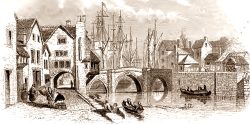
The Frederick Allen papers give us some light into the early years and scope of the Bridgwater and District Allotment Holders Association. The English allotment movement had begun at the end of the eighteenth century and developed over the Victorian period.
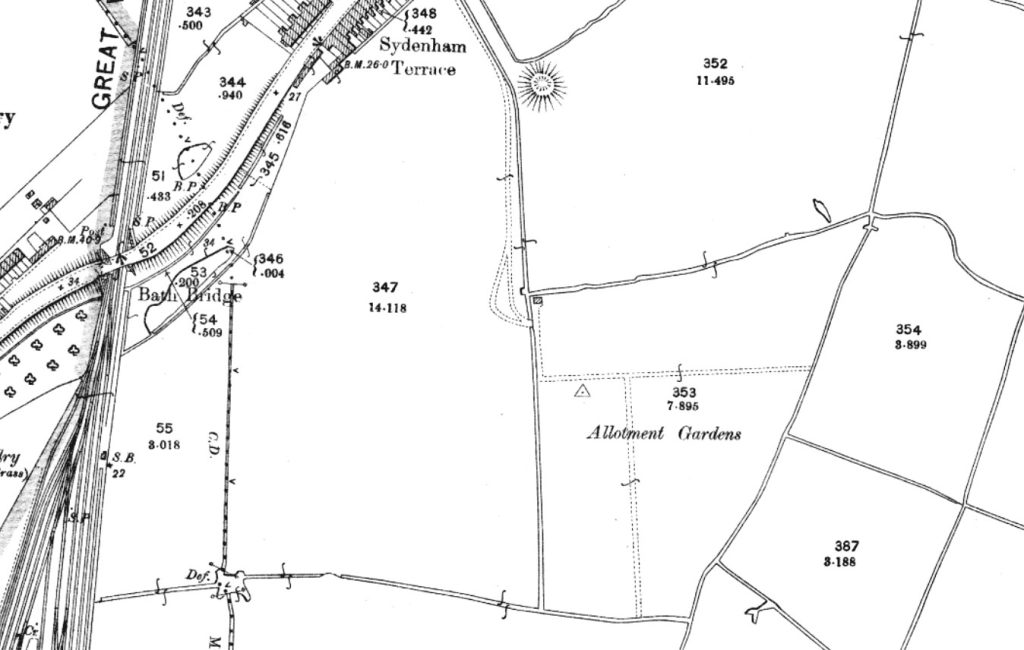
In 1892 the Bridgwater Allotments Committee consisted of members of the council’s General Purpose Committee (Taunton Courier and Western Advertiser 23 March 1892). They initially leased land at St Matthew’s Field and by the time of the 1904 OS Map this and another field to the south of Sydenham Terrace on Bath Road (now occupied by Wyndham and Fairfax Roads) are shown as ‘allotment gardens’.
The 1907 and 1908 Small Holdings and Allotments Acts required local councils to provide land if requested by residents. Frederick Allen was involved with the committee from 1906. In 1913 he was chairman.
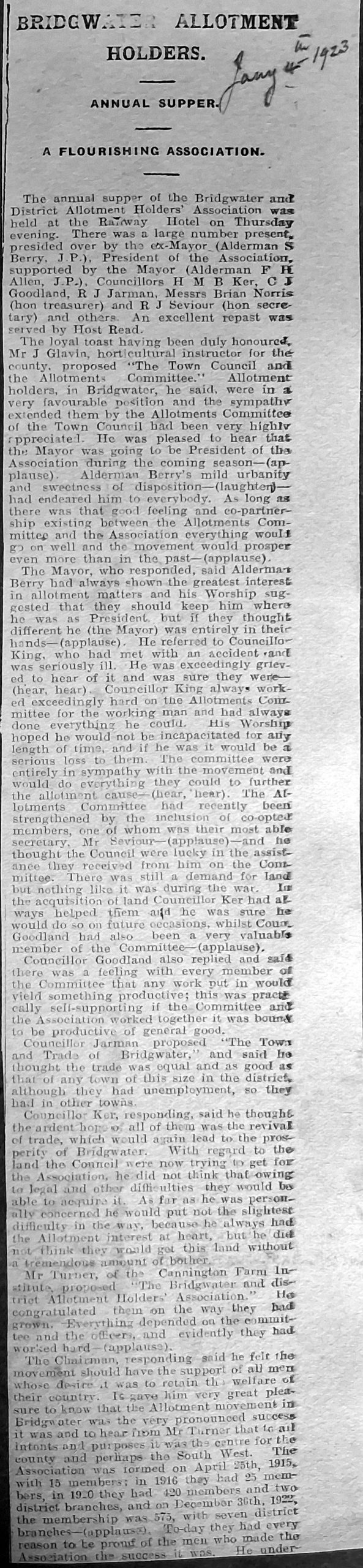
The provision of allotments in the town was turbocharged by the First World War, when food scarcity led to efforts to encourage people to grow their own vegetables. This was when large amounts of land around the town were set aside for new allotments. The first Annual Vegetable and Flower Show in the Town Hall was held in 1917. The Association was formed on 25 April 1919 (Taunton Courier, and Western Advertiser 11 January 1922; Taunton Courier, and Western Advertiser 10 January 1923). Committee meetings were usually held in James’ Café in Eastover. By 1922 there were seven district branches, one in Bridgwater and the rest in the villages: Spaxton, Woolavington and Puriton, Highbridge, North Petherton and Cannington.
By 1930 there were, in addition to the original ground near Bath Road:
- Extensive allotment gardens in Kidsbury – not just the surviving portion, but stretching all the way to what is now Brendon Road. It may have stretched further as there were complaints in December 1922 that Kidsbury allotment holders were damaging the hedgerow adjoining Chilton Road.
- A small allotment in Crowpill Lane (which mostly survives today).
- An allotment behind Wembdon Road, now St Joseph’s School, which was partially used for the entrance of the New Quantock Road.
- ‘Friarn Fields’ An allotment stretching from Friarn Street to the Canal, of which only a small portion remains, the rest being covered by Friarn Avenue. The land in the 1920s was owned by H.J. Squibbs and rented by the council. In 1921 Harry Bradbeer, while working on his allotment, discovered parts of the medieval friary here.
- An allotment in a field off of Rhode Lane, not far from Sunnybank House – later developed into Queen’s Road.
- An allotment at Parkstone Avenue, later redeveloped to extend Parkstone Avenue.
- A long but narrow allotment along the river at Castle Fields, usually referred in reference to the Somerset and Dorset Railway Wharf – now all part of the industrial estate
- An allotment on the Bristol Road near the cemetery – this one survives.
- Two more allotments straddling Bristol Road – one bounded by the Somerset and Dorset Railway, and the other by Union Street and a nursery. The latter one was later used as the site of the Cattle Market.
- Two very large allotments to the east of the railway station and north of Redgate. Half of this survives, the rest was redeveloped into Sydenham.
- Two very small allotments straddling Bath Road just east of Sydenham Terrace.
Around the early years a prize medal was struck for the society. This medal was presumably made to give as a prize at the annual show or dinner.
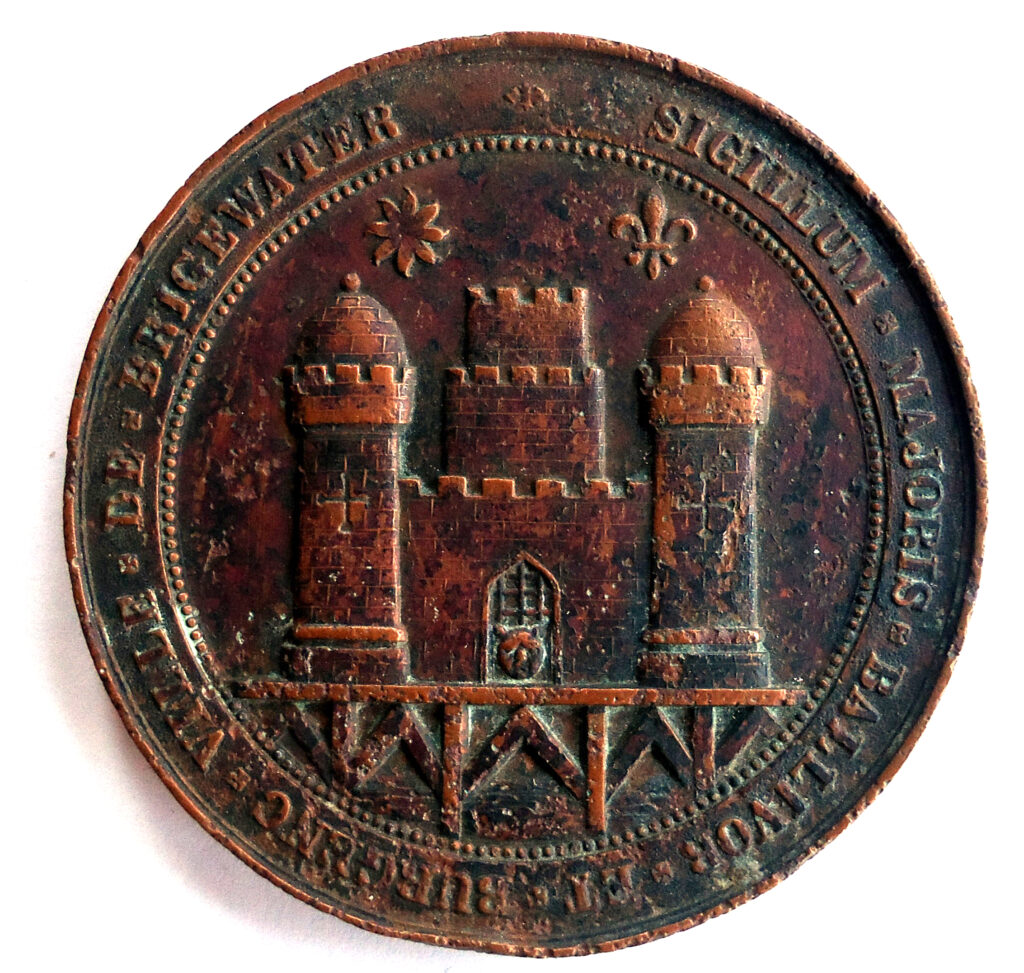
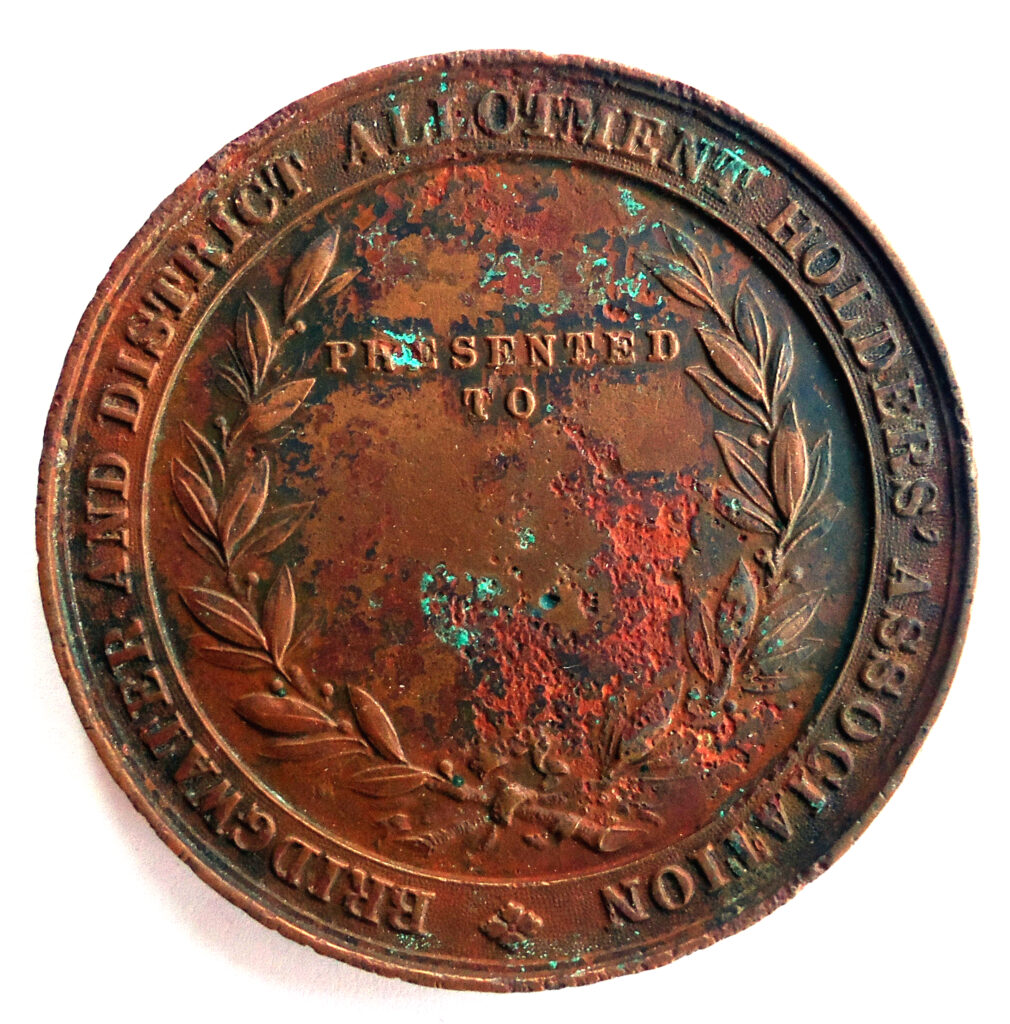
The Bridgwater and District Allotment Association held its fourth annual meeting on 19 January 1923 in the YMCA building in Eastover. Alderman Symore Berry was the president, the previous president, now the chairman, had served for three years, and now whoever was mayor would become president. A.W. Parker was the chairman, the previous chair, Mr Boyce having moved away. R.J. Serviour was the secretary and Brian Norris treasurer. There were 575 members.
There had been over 200 complaints over the previous year, mostly concerning pilfered crops. The society offered compensation to members in such cases, and worked with local enforcement to prevent it, which was one of attractions of membership.
The society also held lectures on gardening and horticulture. Discounts were given to members for seeds and tools in local shops.
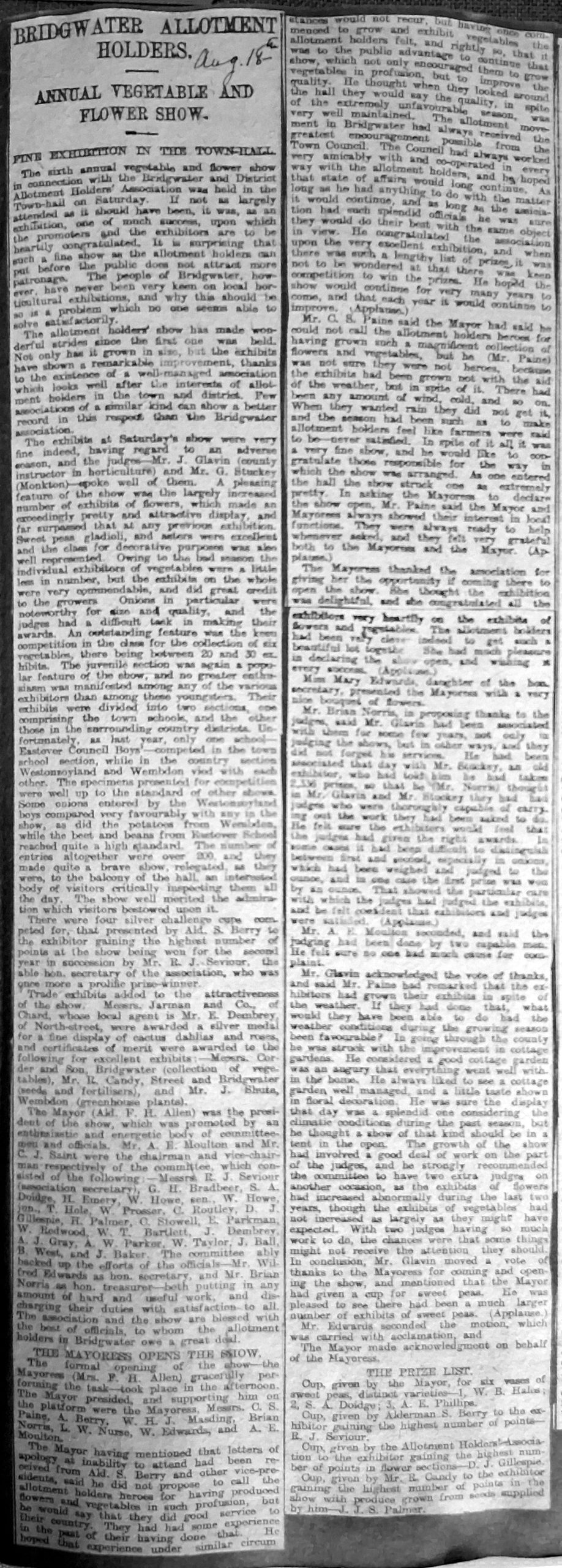
The sixth annual vegetable and flower show held on 18 August 1923. Four silver challenge cups were available, the most recent one had been donated that January by Mayor Allen in his role as president. That was to be given as a prize for best six vases of sweet peas, and the person who won the cup three times over subsequent years would get to keep it.
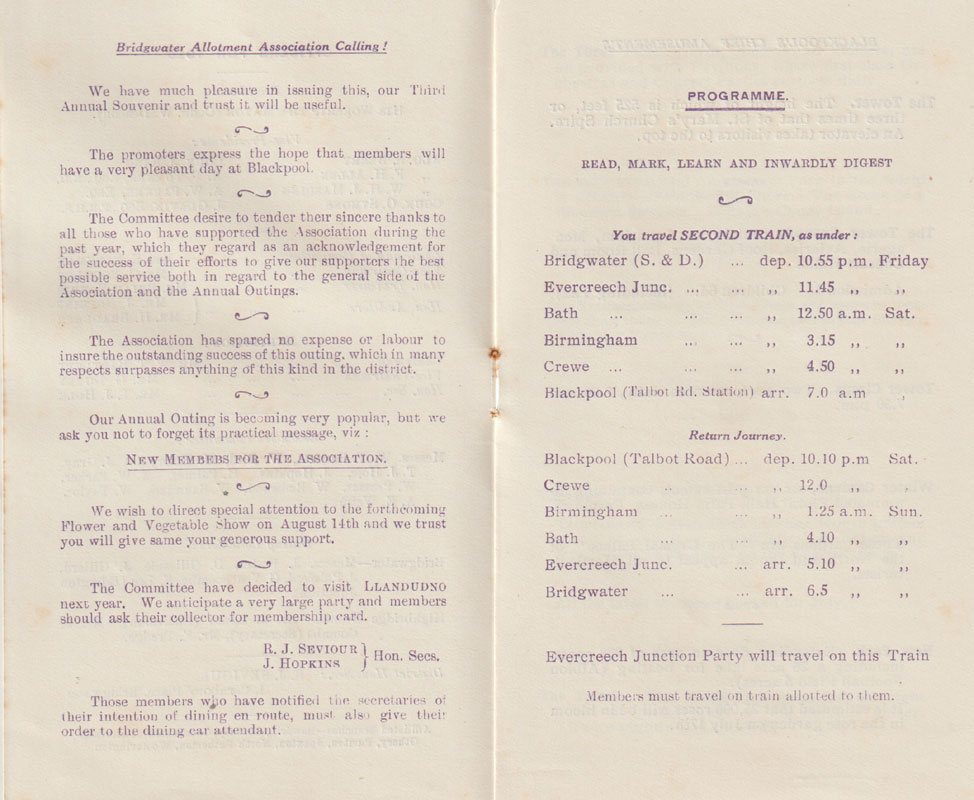
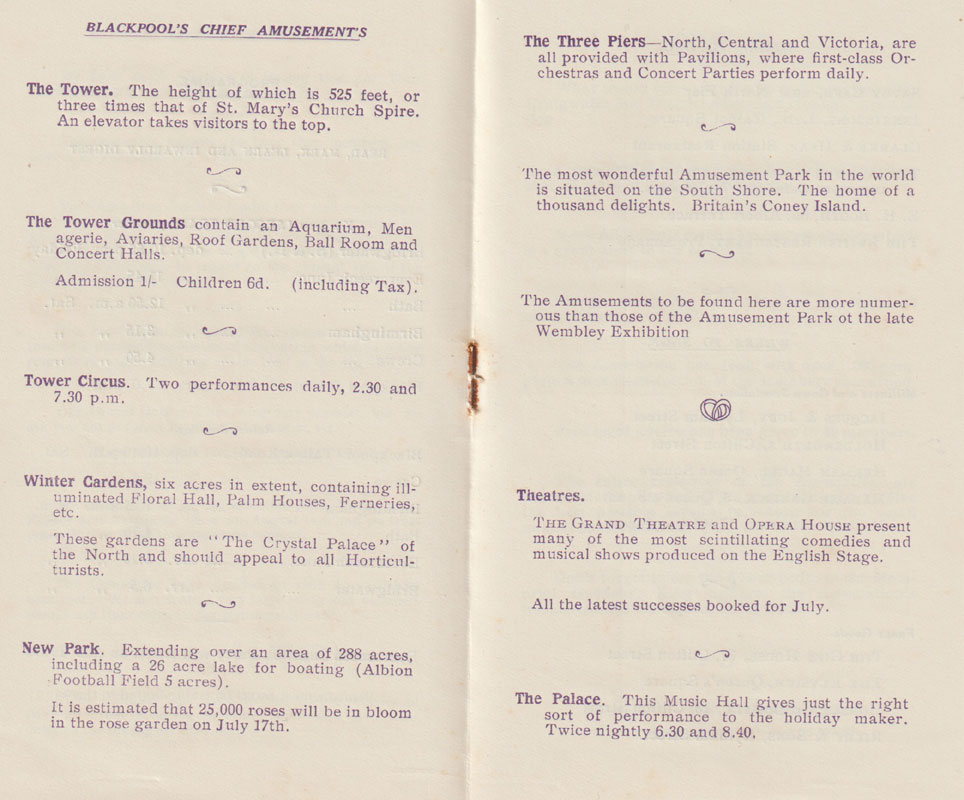
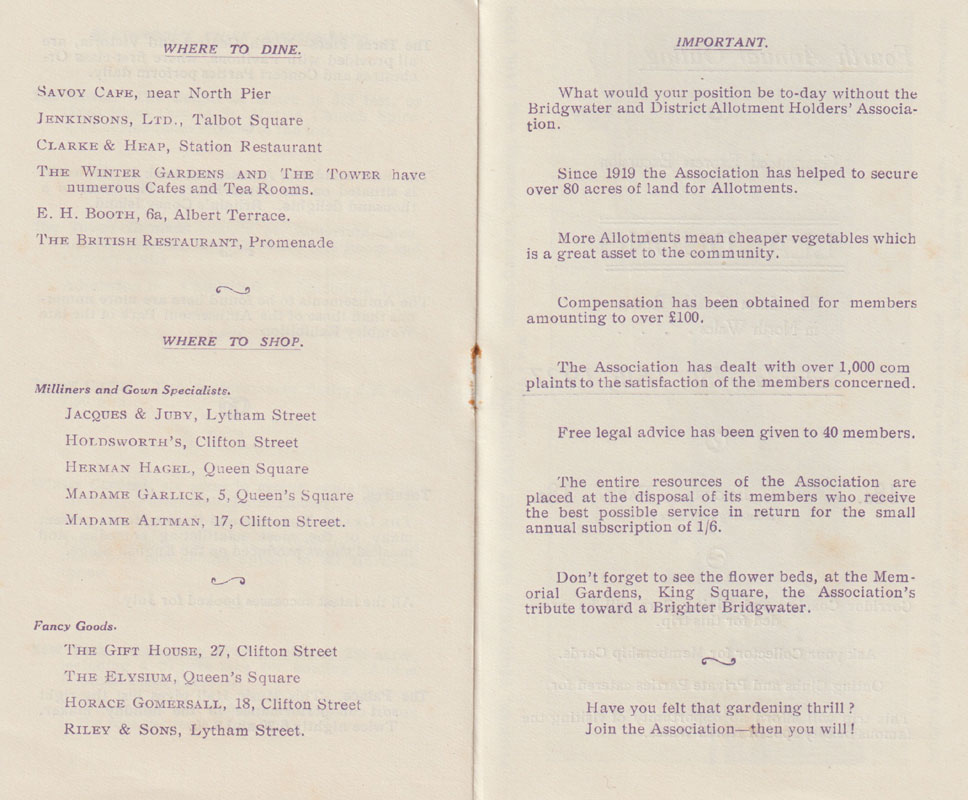
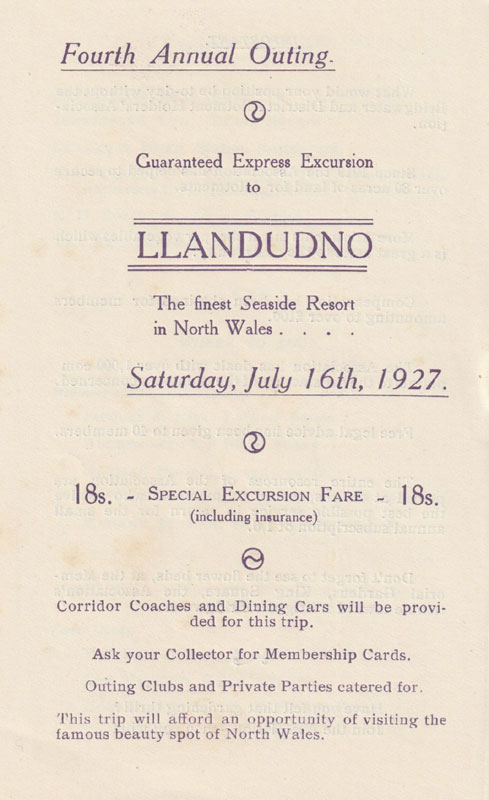
In July 1926 the Allotment Holders Association even made a leisure trip all the way to Blackpool.
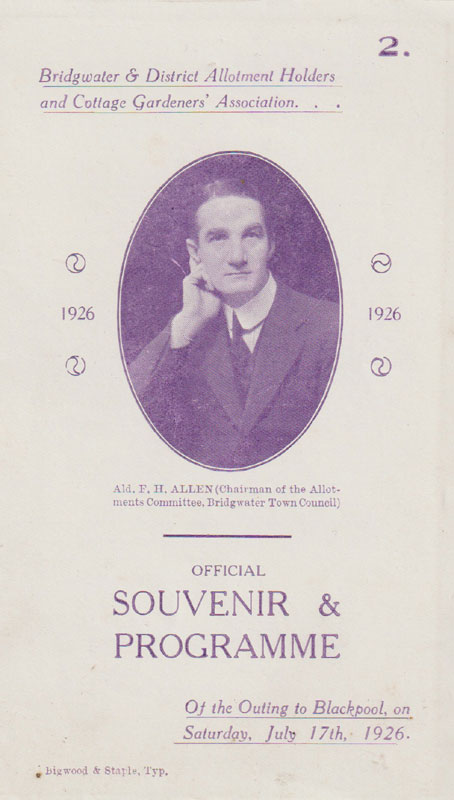
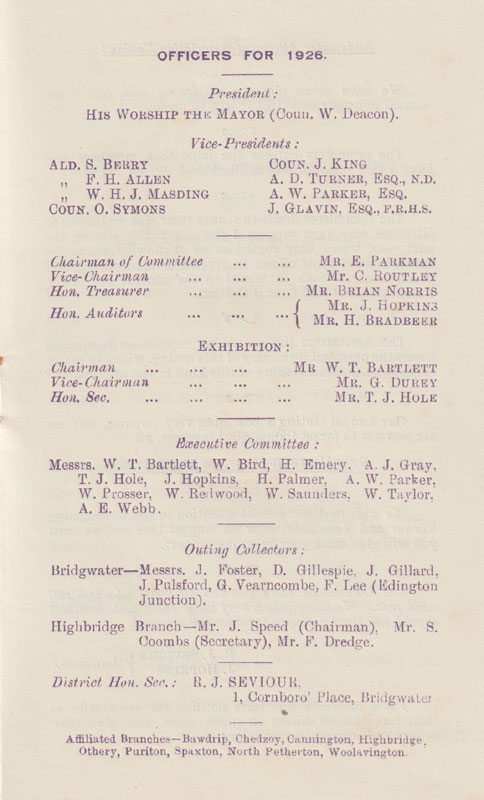
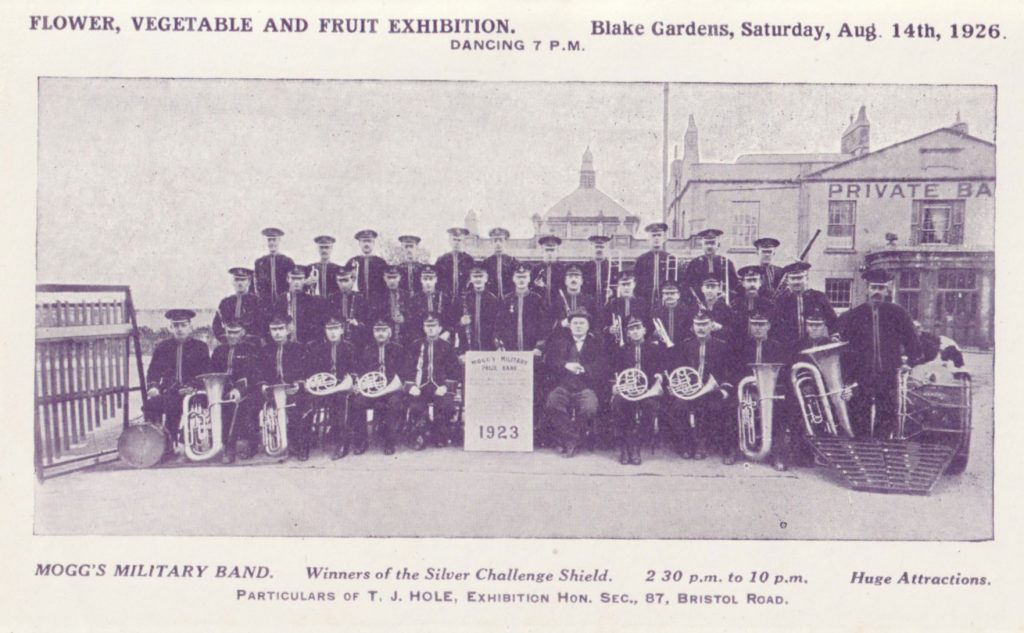
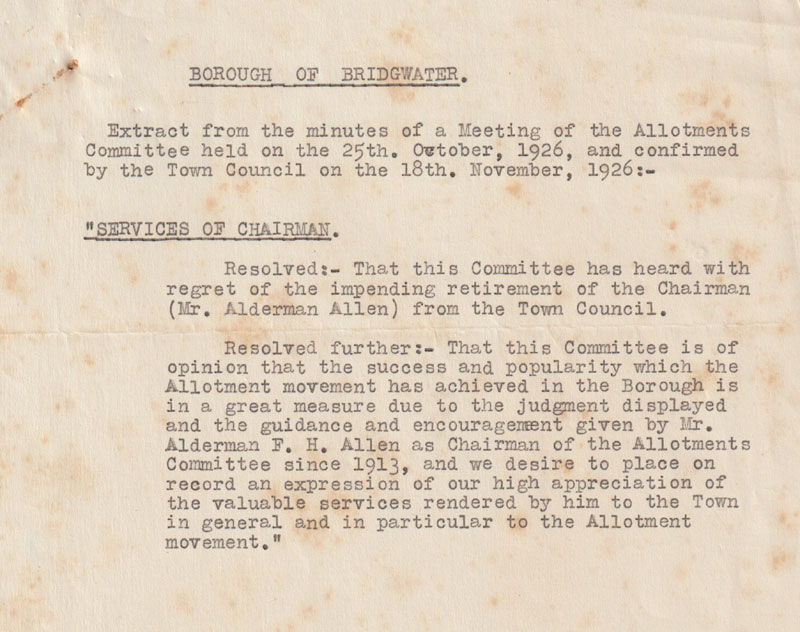
In January 1927 Frederick Allen retired from public life. He was thanks by the society.
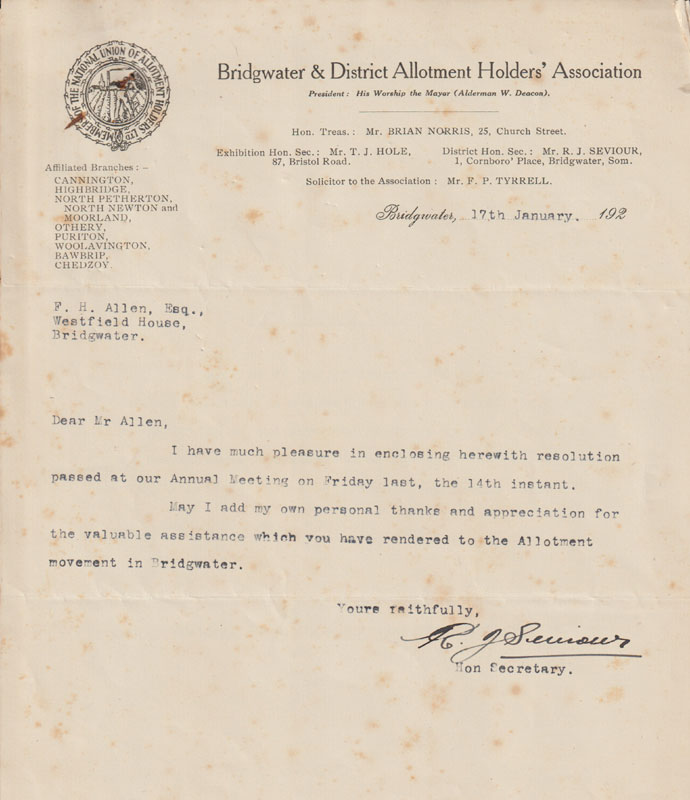
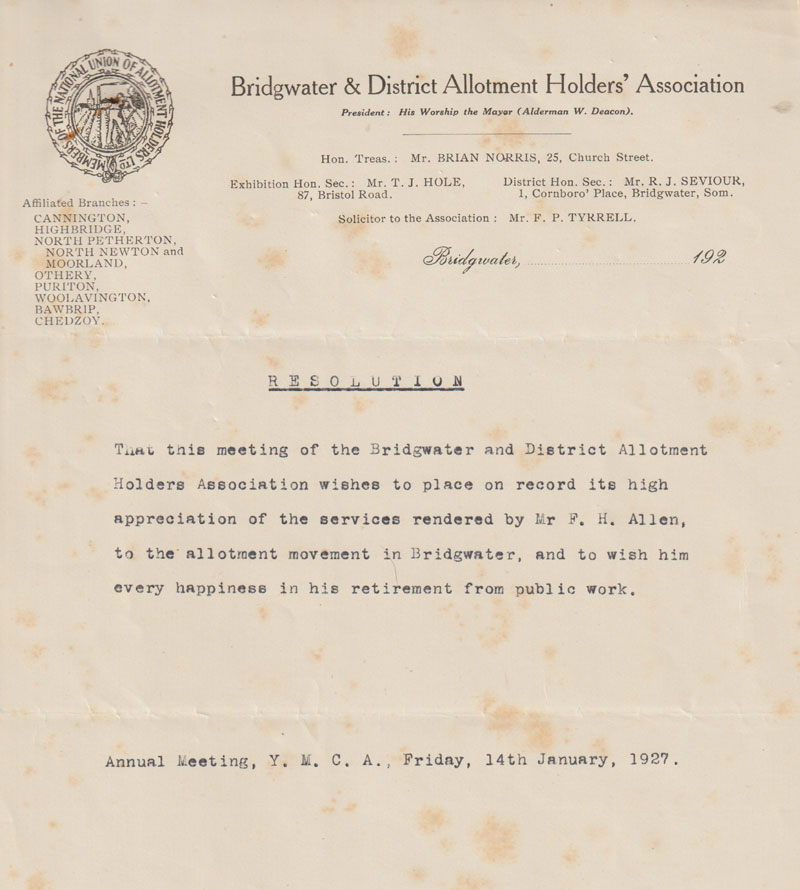
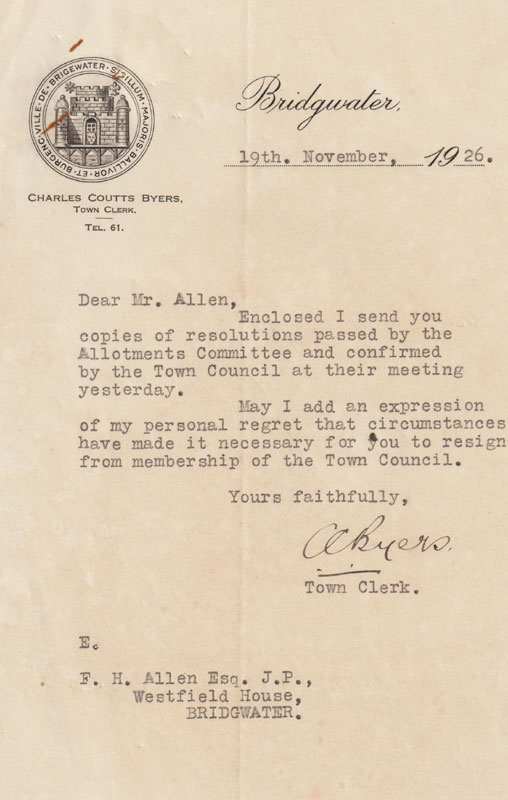
And he was also thanked by the Allotment Committee of the Town Council
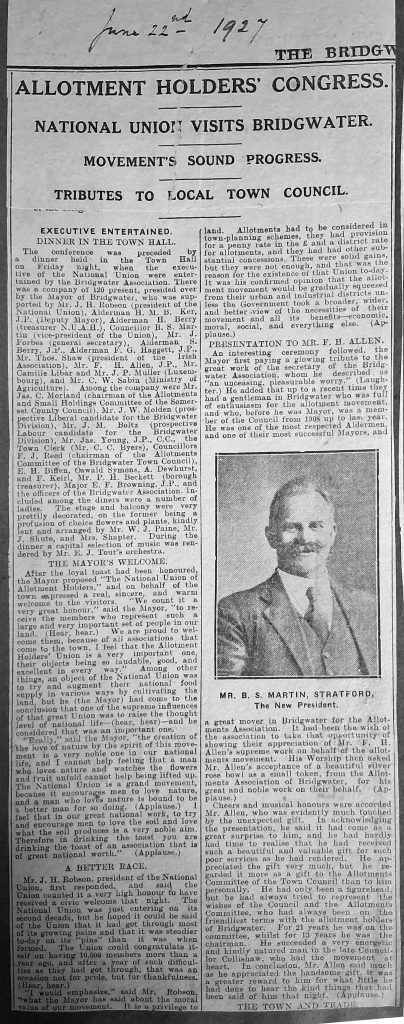
The National Allotment Holder’s Congress was held in Bridgwater on 22nd June 1927.
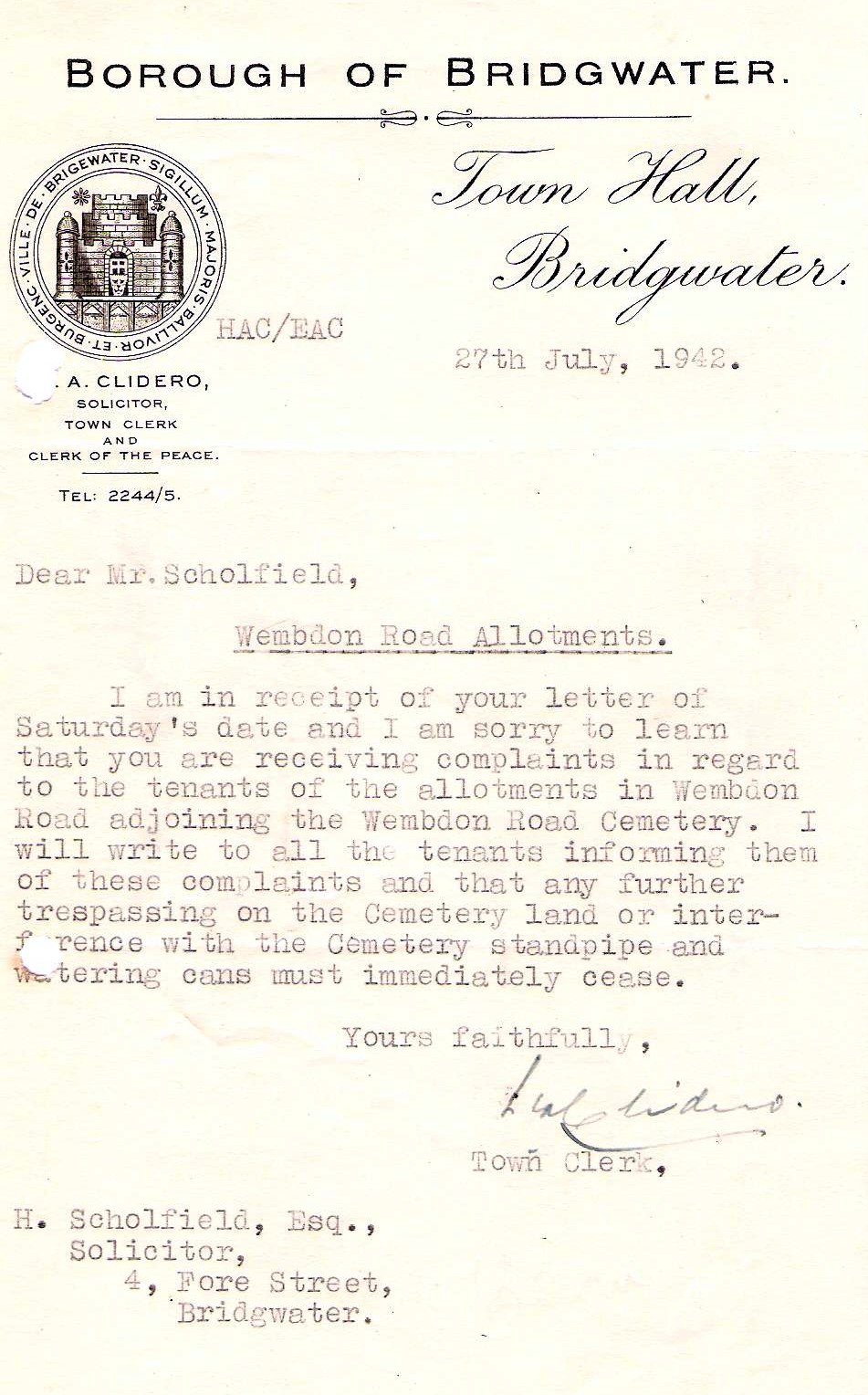
As noted in the list of allotments above, the vast majority of land would be redeveloped in the interwar and post war years as housing estates. More space was allocated for allotments in the second World War, including one adjoining the Wembdon Road Cemetery. Complaints were raised because allotment holders were scaling the cemetery wall to make use of its tap.
May of the war time allotments reverted to private ownership after the war, although one off of Taunton Road by the old brick ponds survives to today.
with additional notes kindly supplied by Clare Spicer and Jill Trethewey