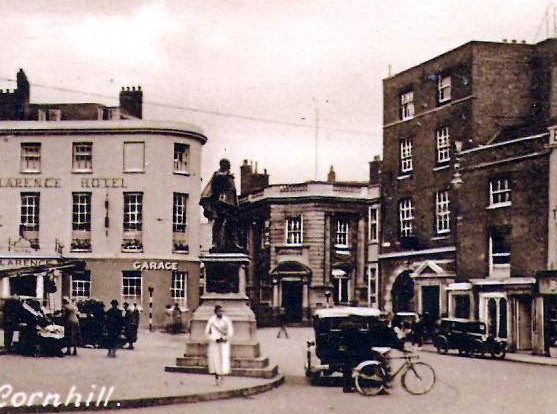
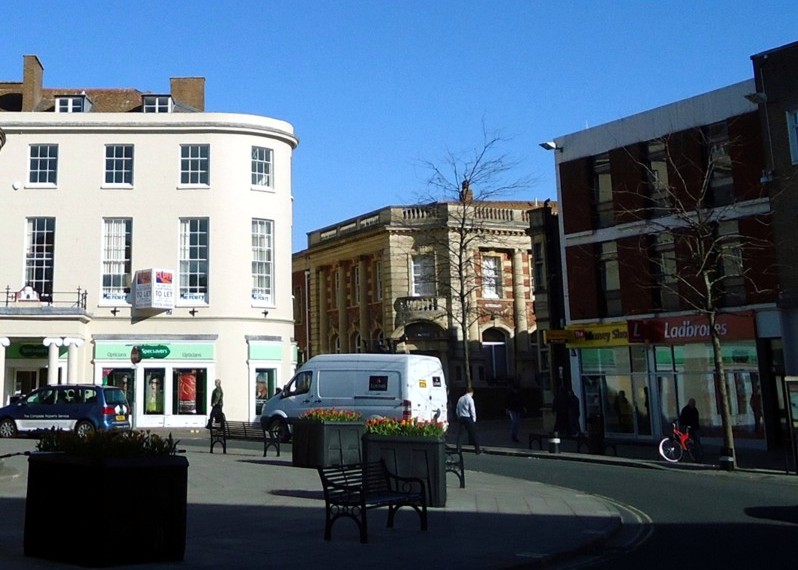
The building of 26 Cornhill, which held the Post Office for the most part of the twentieth century, is today one of the blandest pieces of architecture in the town, which is a shame given its prominent location at the head of the High Street. This was built in 1964 and replaced a remarkably tall building of the latter half of the eighteenth century.
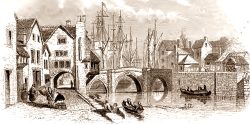
This site, or perhaps that slightly to its north, was the location of the main gatehouse of Bridgwater Castle. Records mention a forework, which would have looked something like the entrance to either the Cathedral or Castle in the market place in Wells. When the Post Office was rebuilt in 1964 excavations in the rear yard found part of the moat. The great height of the eighteenth century building might be partly explained by very solid older foundations.
Bridgwater’s early post offices had been in whatever house or shop was owned by the postmaster. Prior to 1861 it in St Mary Street in the home of Alfred Saunders (whose biography can be read on the website of the Friends of the Wembdon Road Cemetery). It them moved to Bridge House on East Quay, when the postmaster was William T. Mitchell. In 1874 a purpose-built post office was added to the Cornhill Market House complex, which opened around 1875.
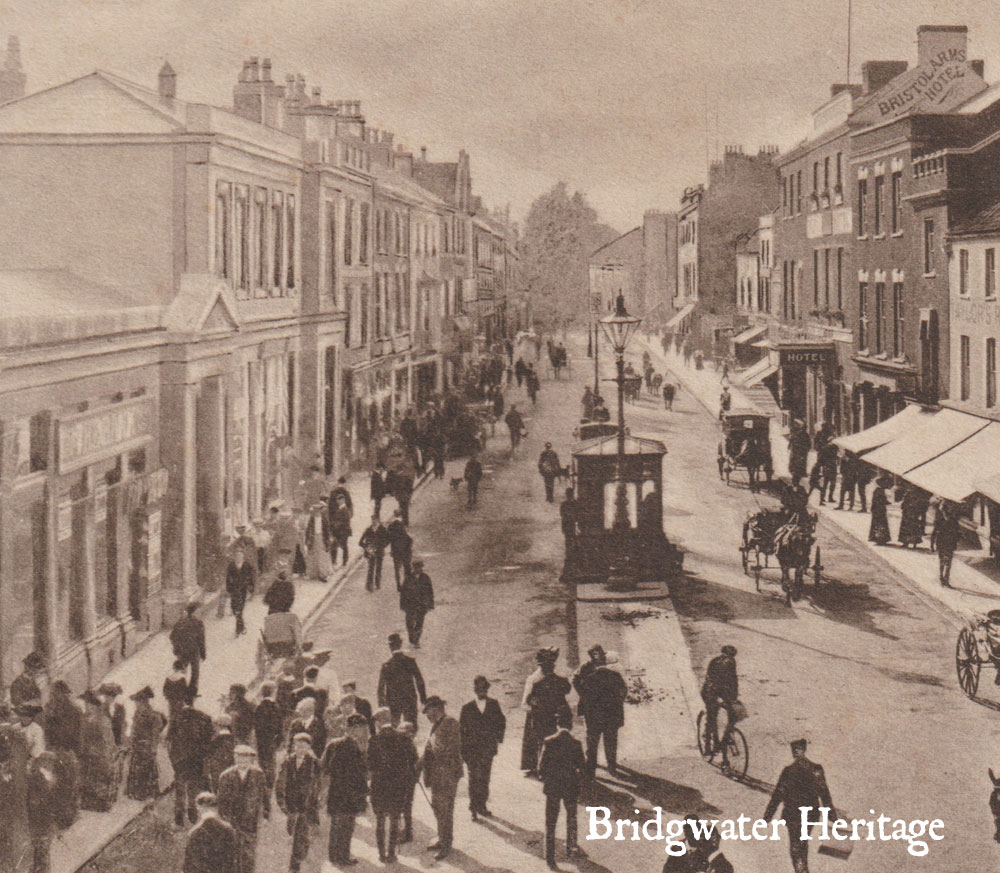
In 1897 the Post Office wanted to enlarge this office, but the Town Council who owned it wanted to charge a much higher rent for the use of the additional accommodation in the Market House building. The Post Office decided instead to buy a large house on Cornhill, formerly owned by Dr Parsons, and converted it. By May 1897 the ground floor had been finished, although there was grumbling in the town that the premises were unsuitable and the façade too narrow to be given ‘an ornamental structure’ befitting to its central location.
Still, the 1897 modification to the ground floor façade added a pleasing semi-circular window and an ornate doorway aedicule with a crown in the pediment and the initials VR.
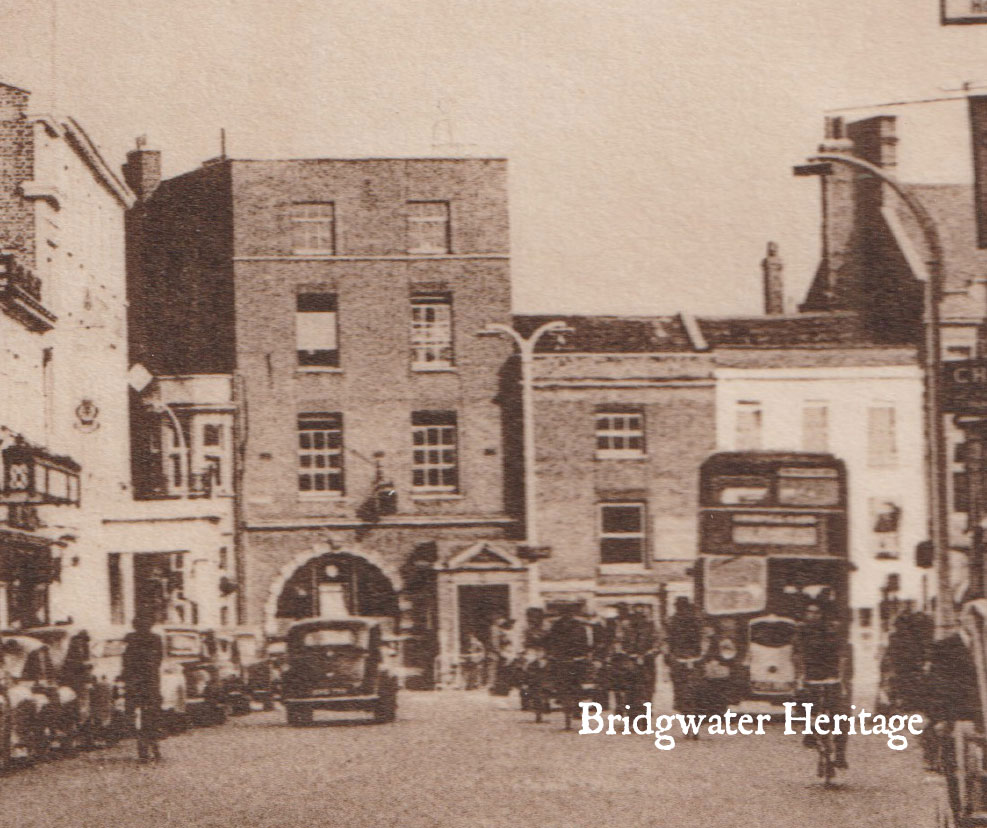
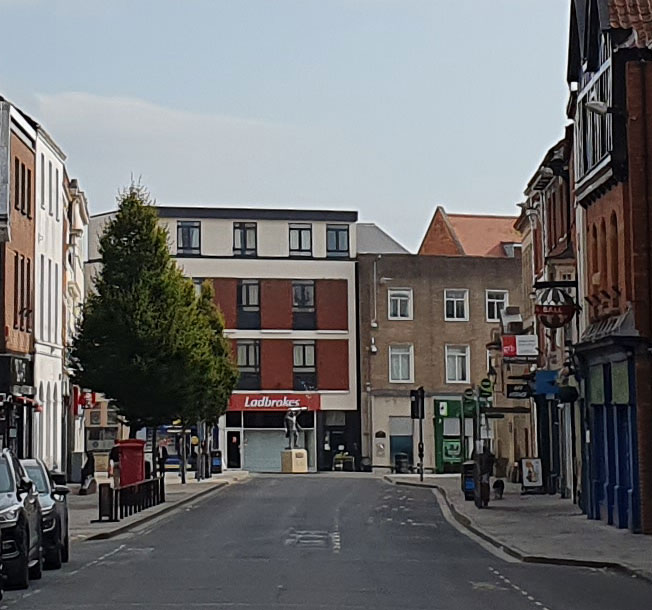
Only two months later the newly refurbished building was opened for public business on the 12th of July 1897. An article in the Bridgwater Mercury described how the main counter ran on the left hand side at right angles to the street, while on the right were partitioned desks for writing telegrams. The large room was well lit by a big arched window, at the top of which was a double sided clock which could be read from both inside and outside the building. After dark the room would be lit by incandescent gas burners in hammered iron brackets and pendants. Beyond the main room was a corridor, in which there was a lift. On the other side of the corridor was the postmaster’s room, which looked out onto the garden at the back. Steps lead down to the basement which was used for battery rooms and coal storage. Stone steps led to the upper floor where there was a large room for the telegraphy equipment, which was being connected up by the Royal Engineers. There was also the telephone switch room and a room for the messenger boys. On the floor above were ‘retiring rooms’ for male and female clerks (for the ladies were expected by and bye), equipped with stoves for cooking meals. There were also ‘separate and suitable’ sanitary arrangements. Mr Challow was the Postmaster (Bridgwater Mercury 12 May 1897 and 14 July 1897).
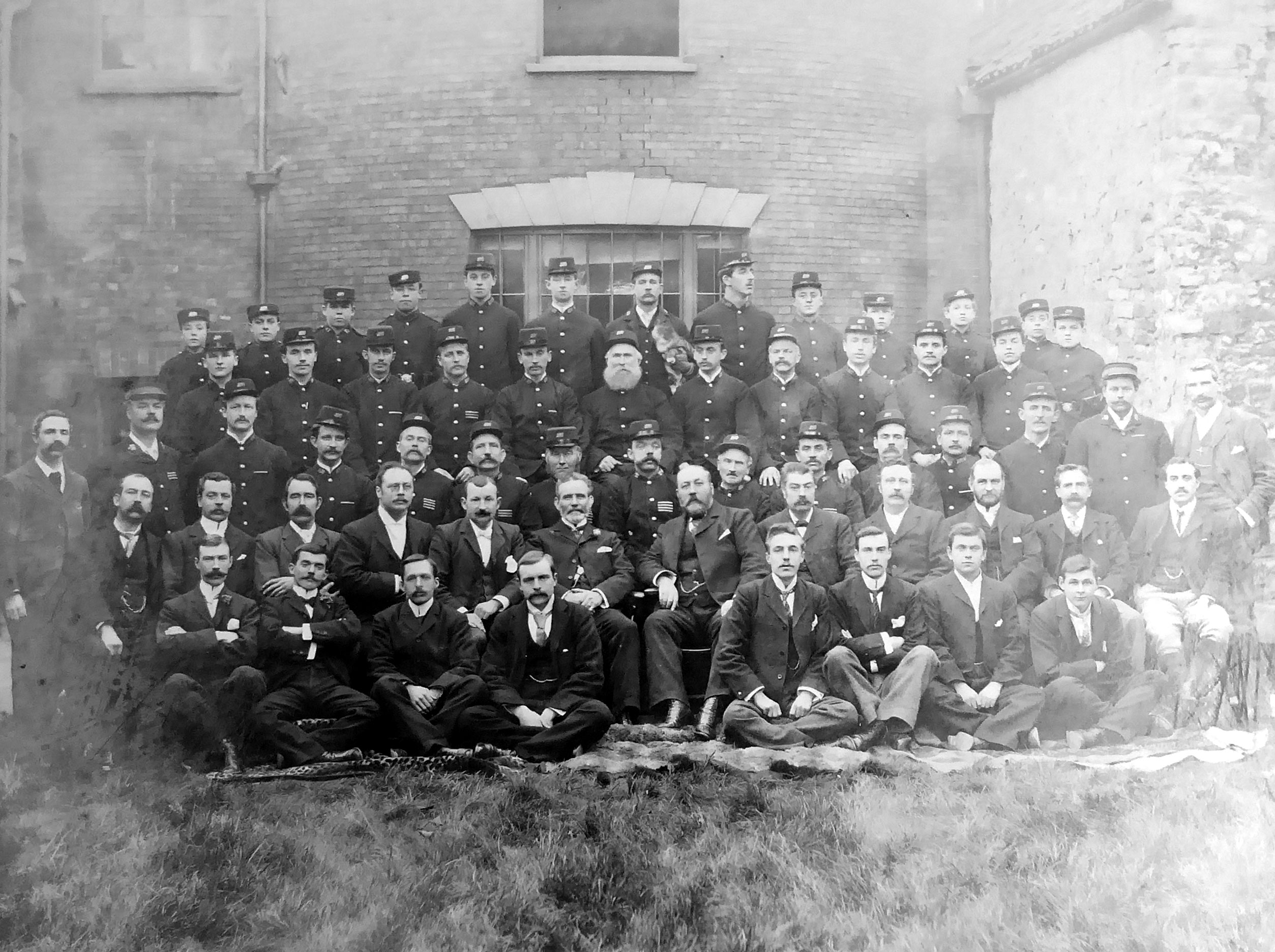
The gentleman in the middle of the first row on seats is possibly Mr Challow. Second from the right in the front row is Frank West (1872-1941) – his biography can be read on the website of the Friends of the Wembdon Road Cemetery.
In May 1903 the foundation stone for a large sorting office was added to the garden behind the old house, a service was held on the 9th of May. A photograph of this event appears in Squibbs’ History of Bridgwater, number 69.

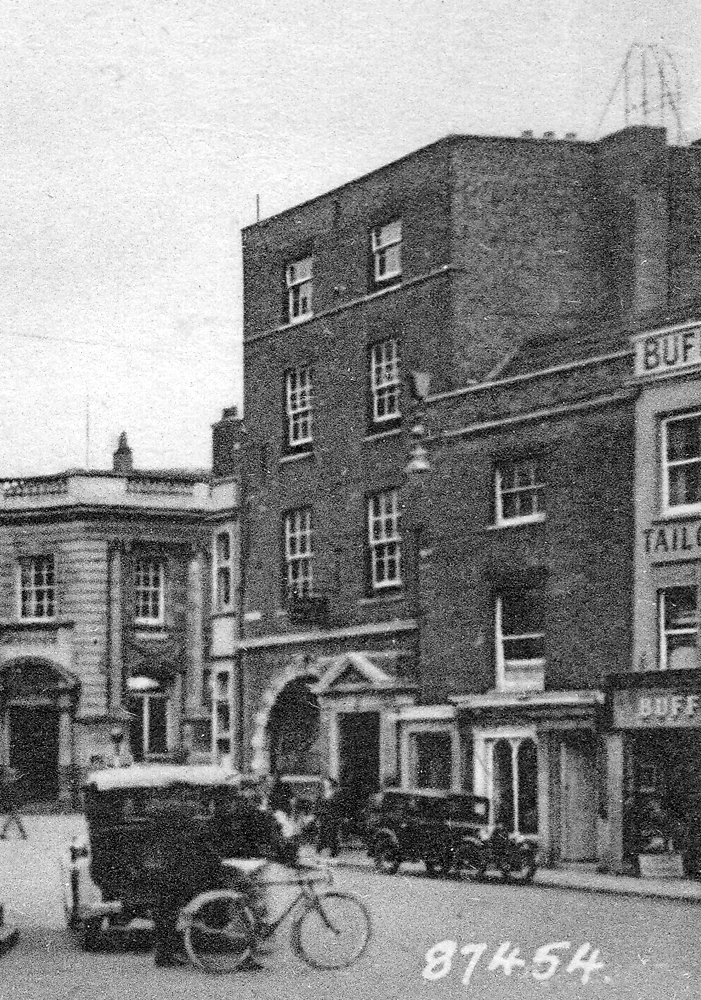
The new sorting office in Friarn Street was opened in July 1962. With this the Cornhill site was rebuilt.
MKP, revised 27 January 2026, with substantial additional notes from Clare Spicer.
References:
Jarman, History of Bridgwater (St.Ives, 1889)
Lawrence & Lawrence, A History of Bridgwater (Phillimore, Chichester, 2005)
Squibbs, Squibbs’ History of Bridgwater (Phillimore, Chichester, 1982)