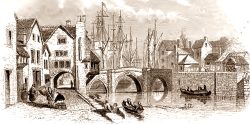
Early Bridgwater museums
In the Nineteenth Century, before the Blake Museum was established, a few antiquities were kept on display in the Town Hall, including weapons from the Battle of Sedgemoor, and some paintings.
Bridgwater residents, the Natural Historians William Baker, FGS, (1787-1853). Robert Anstice FGS. (1757-1845), John Clark (1793 – 1864; Thomas Clark (1793 – 1864), and John Coombes Collins, (1798–1867) all had private collections. Thomas Clark and John Coombs Collins were botanists, so formed Herbaria of books of dried specimens for study.
Baker was a Leather Currier by profession, preparing leather hides ready to pass to the fashioning trades such as saddlery, bridlery, shoemaking or glove making.
He was much interested in Natural History, particularly ornithology and geology. On the formation of the Somerset Archaeological and Natural History Society in 1849 he was appointed Secretary of the Natural History section, and presented 7 papers to it. In his collection were a displayed a Boa Constrictor and a Solan Goose and a Swan with expanded their wings The goose’s span was 5 to 6 feet. There were thousands of insects, and drawn sections of local geology. Seafaring friends brought him objects from West Africa, South America and Australia. It is not known what became of his collection.
Robert Anstice was a man of many interests. He variously was a ship owner and merchant, civil engineer and Somerset’s first County Surveyor. Anstice purchased a hoard of Roman artefacts discovered at Edington in 1801, and also acquired a number of Roman coin moulds, discovered near Chilton Polden, which he displayed in his ‘museum at Bridgwater’. On his death his collection was sold by Sotheby’s in 1846, and some of his antiquarian collection was acquired by the British Museum where they have been digitised, so may be consulted on line. His fossils were sold to the Bridgwater Literary and Scientific Institution, whose library and collection were later purchased by Bridgwater Town Council for display in the Town Hall at the newly opened Free Library there.
John Clark, (1785 – 1853), a Quaker, was initially a grocer, and then a printer, but is better known as an inventor famous for his invention of a machine for writing Latin hexameter verse, which he built in Bridgwater. This survives, together with a modern replica, at the Clark Shoe Museum, at Street. He also invented a method of waterproofing cloth, which he later sold to Mr Mackintosh. He had a keen interest in antiquarianism, and collected masonry from Glastonbury Abbey. His house and shop was on Monmouth Street, in the front garden of which was an assembly of window tracery, reputed to be from Glastonbury Abbey. When Monmouth Street was subsequently widened, the tracery pieces were moved to the Blake Museum.
Thomas Clark (1793 – 1864) his brother, was also a grocer, but also an amateur botanist and interested in fossils. He built Halesleigh Tower, Wembdon, Bridgwater. In 1823, he reported an almost complete skull of a pleosaur, probably belonging to Thalassiodracon, which is now preserved by the British Geological Survey. Two of his nature diaries are in the Blake Museum collection. His herbarium of dried plant specimens is thought to have been in the collection of his great-nephew, Harold Stuart Thompson (1870-1940).
John Coombes Collins, (1798–1867), Vicar of St John’s. Bridgwater, went botanising with Thomas Clark. Some specimens from his herbarium are in the collection of the University of Birmingham.
The Blake Museum
The Museum has its origins in the Brighter Bridgwater project of Mayor Walter Deacon, the goal of which was to increase pride in the Town by celebrating the Town’s past. Events included a vast celebration on Cornhill in 1926 of the granting of the town’s first Charter by King John, and the Bridgwater Pageant, held in June 1927. An Advisory Committee was established to organise the Pageant which was held in the grounds of Sydenham Manor, and a thousand folk took part. There was also a profusion of hanging flower baskets on the town’s lamp posts.
An advisory Museum Committee of the town’s Local Historians was established. A house at No 5 Blake Street, thought to be the birthplace of General at Sea Robert Blake, 1599-1657, was purchased. The early displays largely concentrated on Admiral Blake and the Battle of Sedgemoor. The very first exhibit bought was a fossil Ichthyosaur, from a quarry at Street.
The museum was opened by Col M. Locke-Blake, a co-lateral descendent of Robert Blake, on 15 April, 1926. A reference library of relevant research resources, was formed, containing, as well as books, binders of valuable research notes. Also the beginnings of a valuable photographic archive, which has expanded greatly since and recently fully digitised. There was an Assistant Curator, Mr Hurley, who occupied the cottage next door. He acted as a caretaker and cleaner, and gave talks to visitors.
At the abolition of the Borough Council in 1974, it was run by Sedgemoor District Council, who appointed professional and Curatorial and Administrative staff.
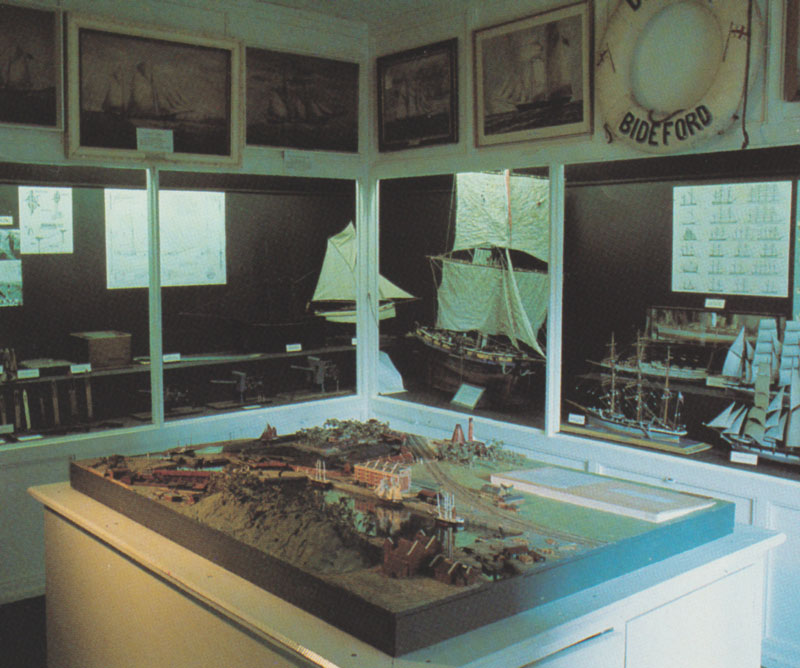
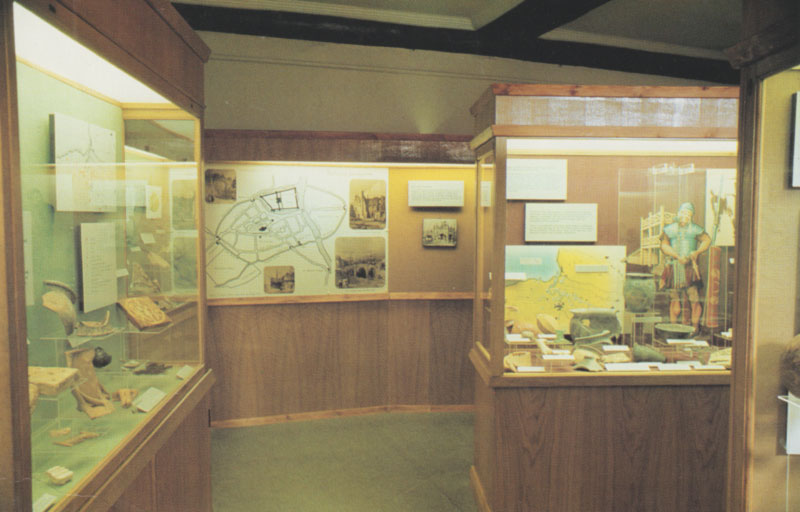
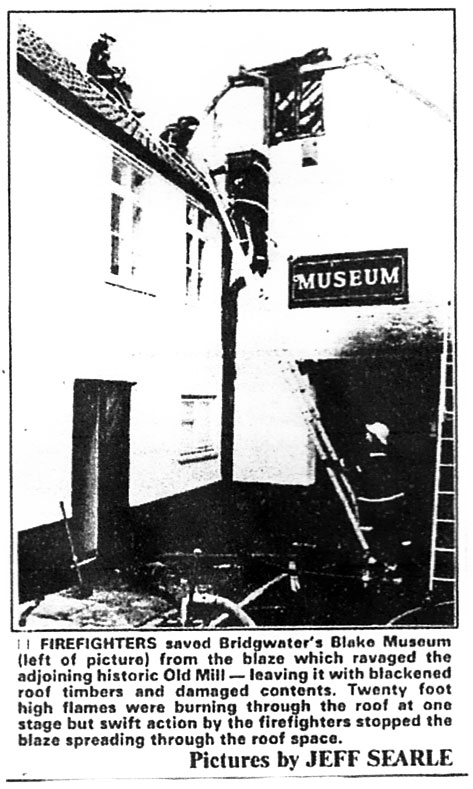
In 1987, the Town Mill, next to the museum, was bought as an extension, but was badly damaged by fire in 1995. It is only now that work is beginning to restore it.
In 2007 the District Council proposed selling the collection and building, in order to save money, but after a ferocious public row, it was returned to the town Council, with some funding to permit an upgrading of the facilities. The paid staff were dismissed, and it has been run since by volunteers. The upgrading was undertaken by enthusiastic volunteers from the Museum Friends, led by Dr. Peter Cattermole.
The Museum has now a Shop and galleries about Robert Blake; Bridgwater’s history, Archaeology and geology; John Chubb’s art; the Battle of Sedgemoor, with World Wars I and II; Transport; and local Bygones. A room is used for temporary exhibitions and meetings. Volunteers also maintain the gardens which adjoin Blake Gardens, and provide catering there for Town Council organised events in the Summer. Visit their website here.
See also Tony Woolrich’s Museum Reminiscences.
The Brick and Tile Museum
The museum is dedicated to the Brick and Tile Industry of Somerset. The Museum incorporates the last surviving ‘pinnacle kiln’ in Bridgwater, which dates from the 19th century, and has been scheduled as an ancient monument and Grade II* listed building. It used to be one of six at the former Barham Brothers’ Yard at East Quay. The industry declined during the 20th century as the machine-made products of the London Brick Company were more uniform than those produced in Bridgwater, and the increasing use of concrete after World War II. The kiln was last fired in 1965, the year that the works closed.
The existing works were converted into a museum in the 1990s. It includes the collection of bricks, tiles and tools assembled by the Blake Museum, Bridgwater, but impossible to display there, due to lack of space. Demonstrated inside are the tools, methods and processes involved in making a variety of bricks, tiles, and terracotta plaques. The museum was managed by Sedgemoor District Council, but was passed to the South West Heritage Trust. See: https://swheritage.org.uk/schools/visit/brick-and-tile-museum/