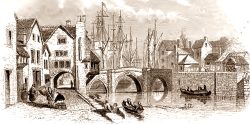
The modern housing estate of Tregenna Close, Hazeley, Helena Court and part of Appledore Drive, once made up the site of the Bridgwater Iron Works.
George Hennett
The foundry seems to have been established by George Hennett in about 1845. The establishment of a foundry seems to have followed on from the laying of the Bristol and Exeter Railway line in 1841, which also led to the creation of the adjoining railway carriage works. The new railway would have brought raw materials, primarily iron ore and coal from Wales, and then taken away the finished products.
George Hennett (1799–1857) was a railway engineer and contractor. Hennet’s first railway work was for George Stephenson. Working on his railways allowed him to develop his engineering knowledge and he gained membership of the Institution of Civil Engineers in 1831. About six years later he undertook some work for Isambard Brunel, helping with the survey of the Great Western Railway which he was building from London to Bristol. He then obtained a contract to lay the track on part of this line, followed by similar contracts on the Bristol and Gloucester Railway, Cheltenham and Great Western Union Railway, and Oxford and Great Western Railway. He was awarded a contract to construct the track on the South Devon Railway in 1844 but latter received additional contracts for wooden viaducts, bridges and stations. Further contracts were won for supplying and laying the pipes necessary for the atmospheric traction system and to build the engine houses for the atmospheric pumps and boilers.
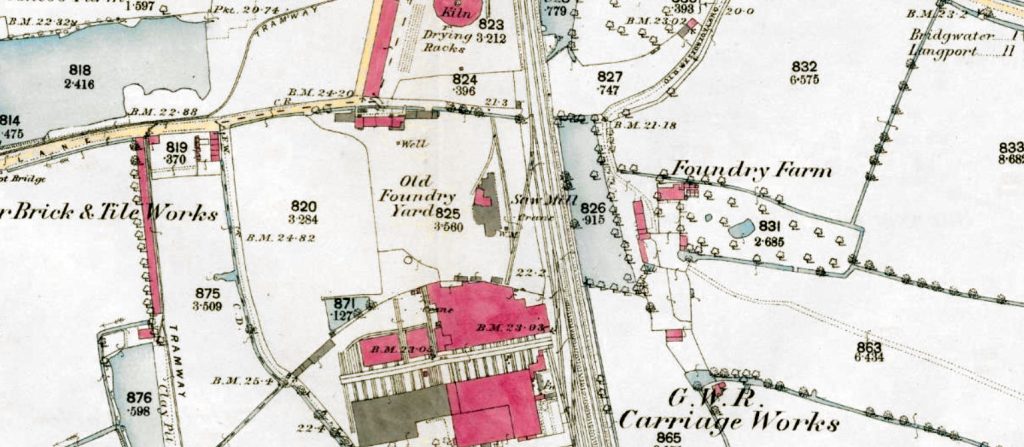
After he won the contract to supply the atmospheric pipes he either purchased or established an ironworks at Bridgwater to undertake the work and, later, to build rolling stock for several railways. He owned the iron foundry by the time of the 1840s Tithe Apportionment Survey. The land for this foundry clearly straddled the railway line that cut it in two, as ‘Foundry Farm’ (Bridge Farmhouse, Penzoy Avenue) can be seen on the below map.
This location allowed the import by boat of raw materials from Wales and the dispatch of finished work to south Devon using the Bristol and Exeter Railway, as there was a direct rail link to the main line near Bridgwater station. The carriage workshops for the latter were on an adjacent site.
In 1881 the site was described as consisting of “foundries, fitting and erecting-shops, smiths’, carpenters’, boiler-makers’ and pattern-makers shops, timber, carriage and repairing sheds, with the costly fixed plant therein. Also stores, offices, stables, cottage and other substantial buildings and appliances, together with broad and narrow-gauge rails, tramways and turn-tables, with a siding to the Great Western Railway, the whole occupying an area of four acres and 28 perches.”
These contracts amounted to over £400,000, about 20% of the total cost of the railway, and Hennet was able to buy back many of the atmospheric pipes for scrap once they were made redundant by its premature abandonment. Once the line was open he also supplied some of the stock that ran on the line, was awarded a five-year maintenance contract. In 1851 he won a new contract for doubling the line near Totnes railway station.
In 1853 he was declared bankrupt, owing about £350,000. The staff who had worked for Hennett were transferred to the Railway who then undertook their own engineering.
Hennett died following a heart attack on 20 April 1857:
BRIDGWATER Intelligence of the death of Mr George Hennet, the eminent railway contractor, was received here on Tuesday, and created a general feeling of regret among the inhabitants, who have now to mourne the loss of one of Bridgwater’s most steady and undeviating friends. Requiescat in pace!
Taunton Courier and Western Advertiser, 29 April 1857
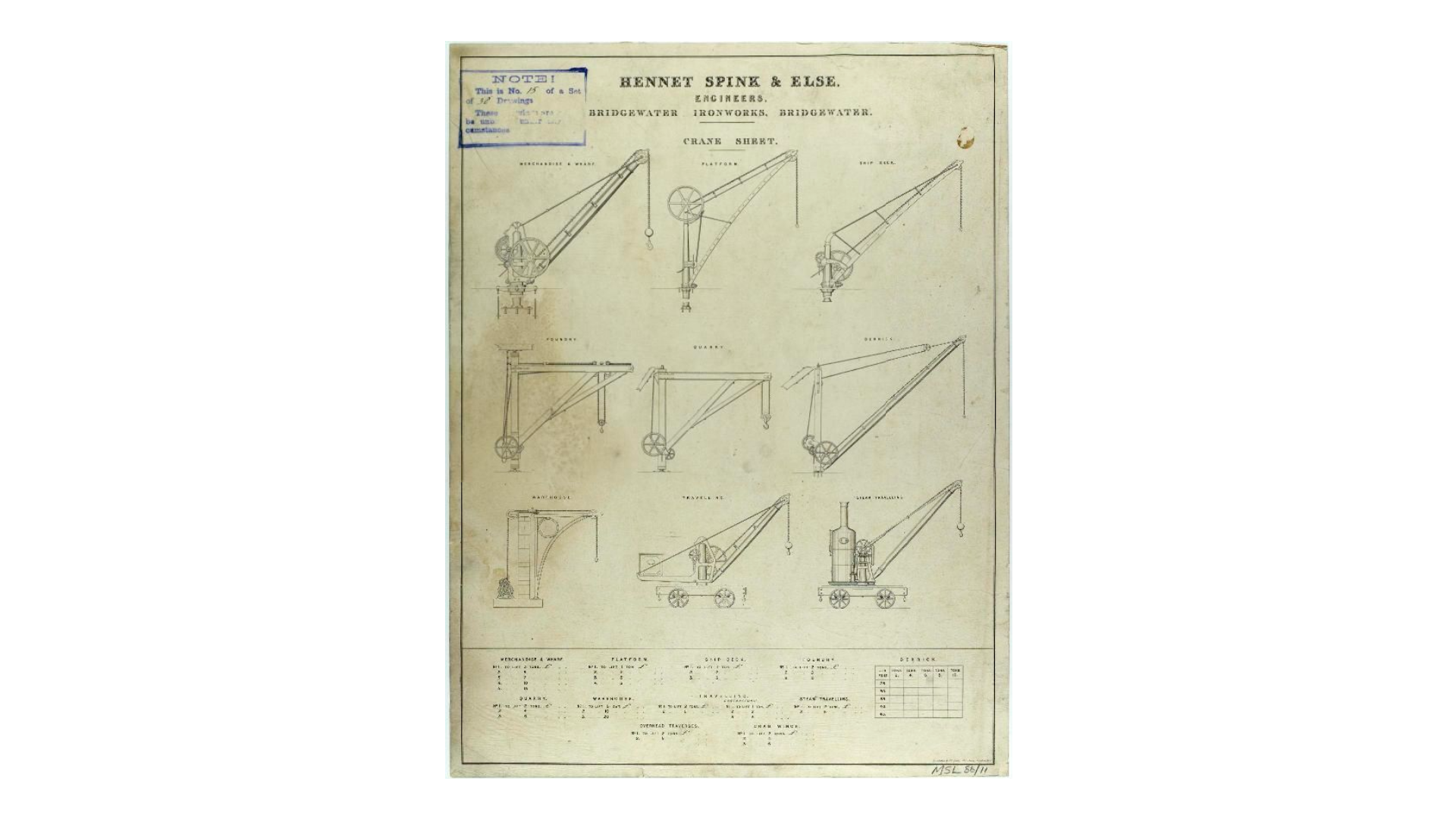
Hennet, Spink and Else
George’s son Follett Charles Hennet (1835-1893) took over in 1857. The partnership of Hennet, Spink and Else formed soon afterwards. ‘Spink‘ was Daniel Spink 1832-1907. Born in London, died in Folkestone. In 1861 he lived in Stowey. ‘Else‘ was Richard Charles Else, later of Binford House. His obituary can be read below.
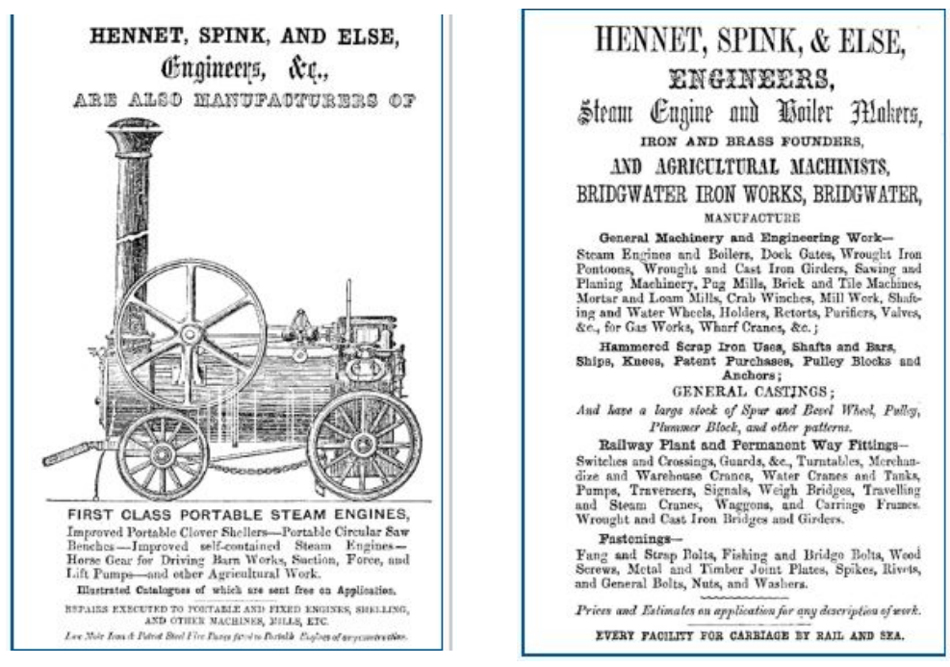
Hennet, Sprink and Else were advertising by 1859:
POINTS and CROSSINGS, Turntables, Cranes, Wrought and Cast-Iron Girders, Fang, Strap and Fish Bolts, Wood Screws and General Railway Fittings and Fastenings, manufactured by HENNER, SPINK and ELSE, Bridgwater Iron Works, Bridgwater, Somerset.
Railway Times, 13 August 1859
Subsequent Timeline
1862: Hennet, Spink & Else supplied a cast iron lighthouse for Watchet West Pier, which still stands.


1863 – 1864: they made a ‘swivel’ bridge for Jessop’s North Entrance Lock, Bristol Harbour. This was similar to Brunel’s bridge located nearby, which was built by George Hennet.
1863: Supplied the footbridge for Exeter St David’s station: “Mr Kerslake of this city is erecting the roof, and putting up the rest of the iron work, with the exception of the footbridge leading to and from the various platforms, which is the work of Messrs Hennet, Spink and Else of Bridgwater.” Western Times, 21 August 1863


1863: The Bideford Old Bridge was replaced by one of iron The amount of the tender was £3,073.
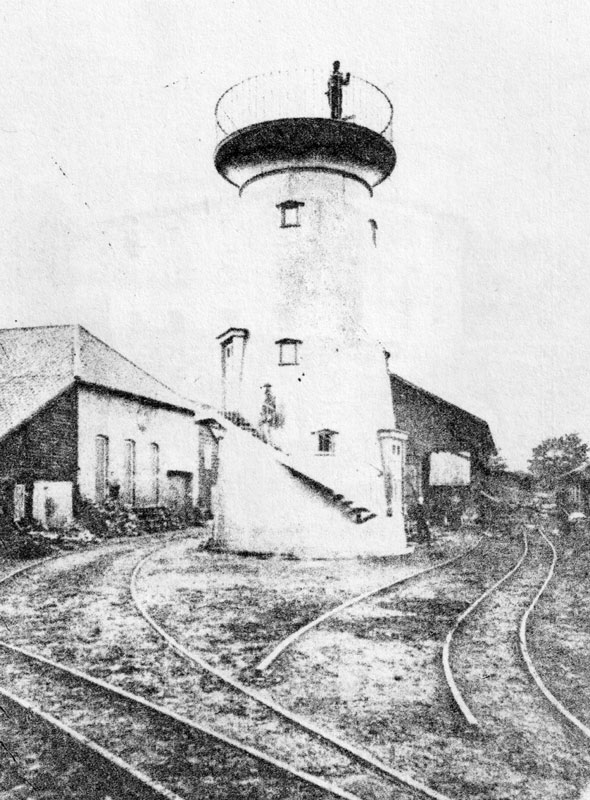
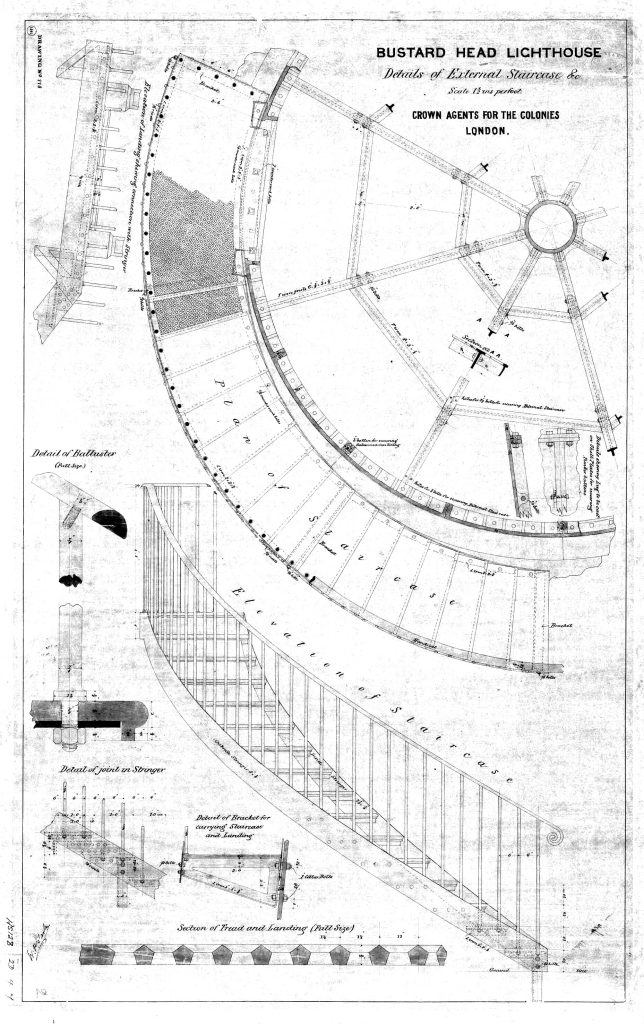
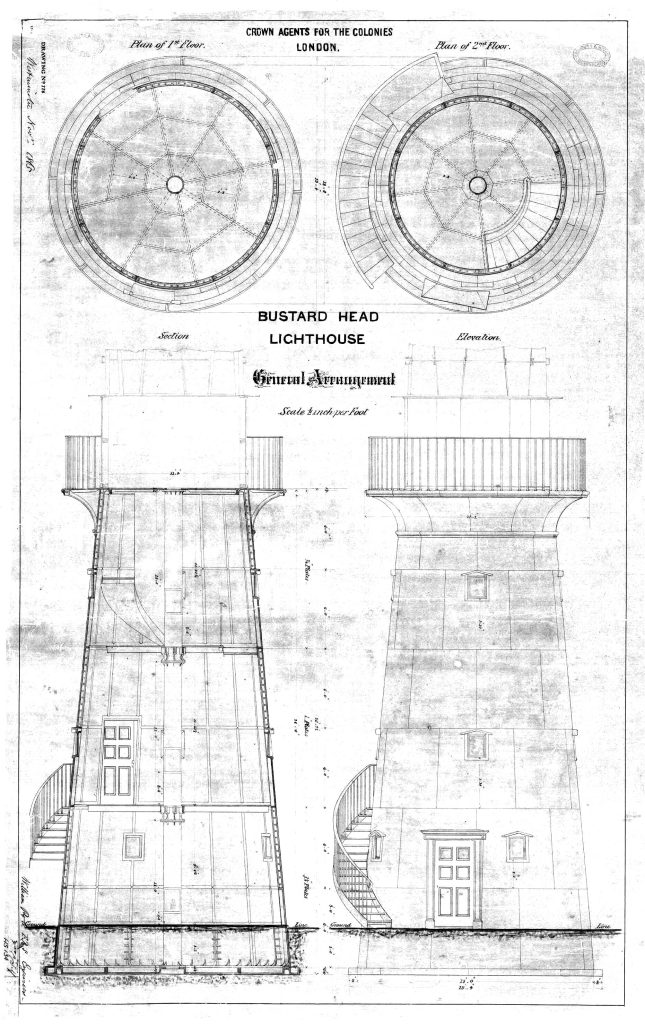
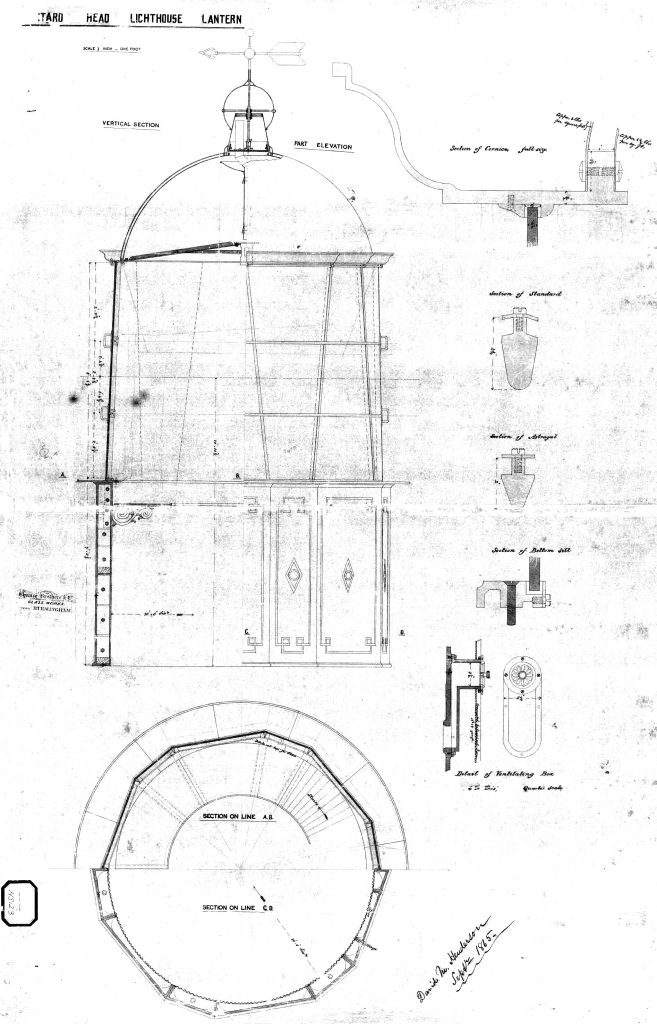
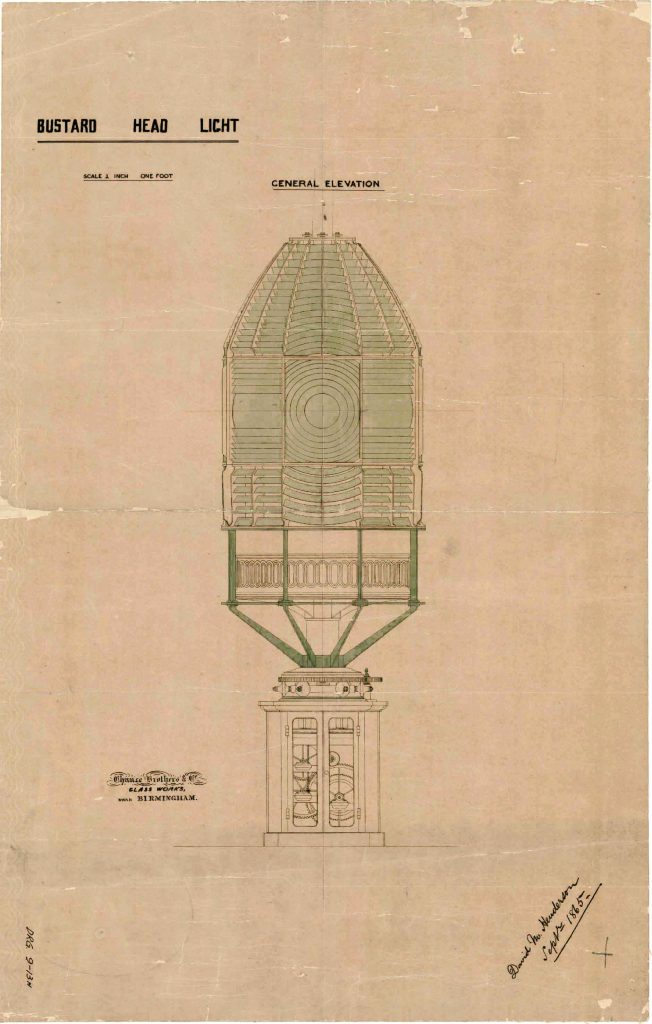
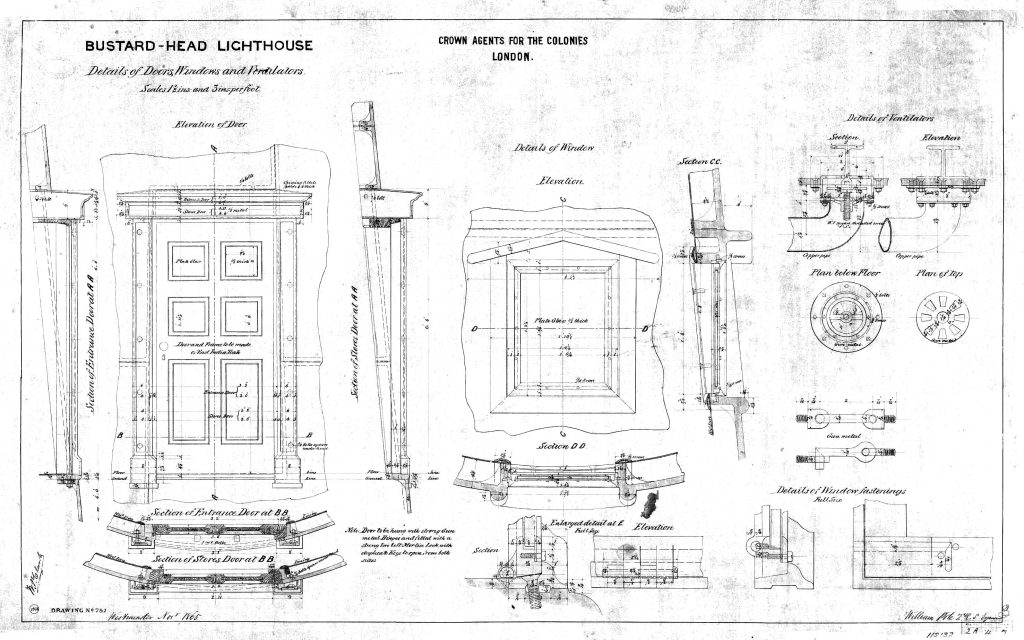
1864: Order received for cast iron lighthouse tower at Bustard Head, Queensland. The components were shipped in 1867. A video can be seen here. The lantern and the light within it were both made by Chance Bros of Birmingham.


Collection of drawings for Bustard Head Lighthouse
In the 1860s the Government became concerned about lighthouse provision in the Colonies, and selected on prefabrication in cast iron, which could be commissioned by the Crown Agents for the Colonies, shipped abroad and assembled by unskilled labour. These drawings are signed by William Pole, FRS, who must have been acting as a consultant. This was WILLIAM POLE, (1814–1900), engineer, musician, and authority on whist, who died at his residence, 9 Stanhope Place, on 30 Dec. 1900. He was a consulting engineer, biographer, and polymath. He designed the lighthouse for Sandy Cape Light, Queensland; it was identical in design, but taller, and made by Kitsons, of Leeds. See Wikipedia and Graces Guide for more information about him. For the original images see Wikimedia Commons.

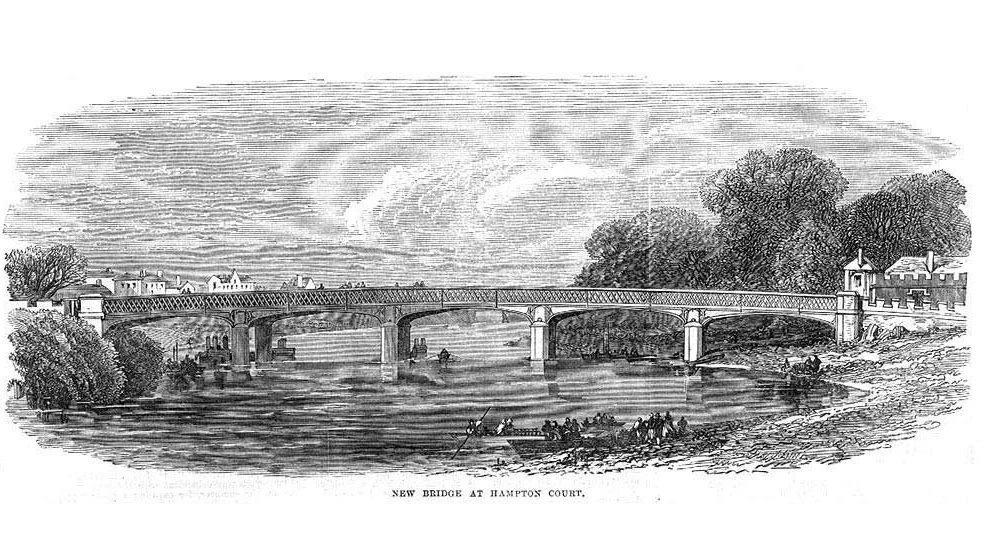
1864: The new iron bridge over the Thames at Hampton Court – “one of the ugliest bridges in England“. Removed in 1930.
1865: Supplied cast iron members for the Weybridge cast iron arch bridge
1865: Awarded contract for construction the cast iron tower for Whitford Point Lighthouse.

1865: The partnership between Hennet, Spink and Else dissolves when Richard Charles Else retires. Business is then carried on as Hennet and Spink
1869: The company was reportedly on the brink of bankruptcy (West Somerset Free Press, 27 November 1869)
1871: 300 workers in the foundry and 200 men in the adjoining carriage works secured a limit to their working day to 9 hours from their employers (Exeter and Plymouth Gazette, 10 November 1871)
1873: The business was reconstituted as the Bridgwater Engineering Co. Ltd.
1878: The ironworks closed with the loss of 300 jobs.
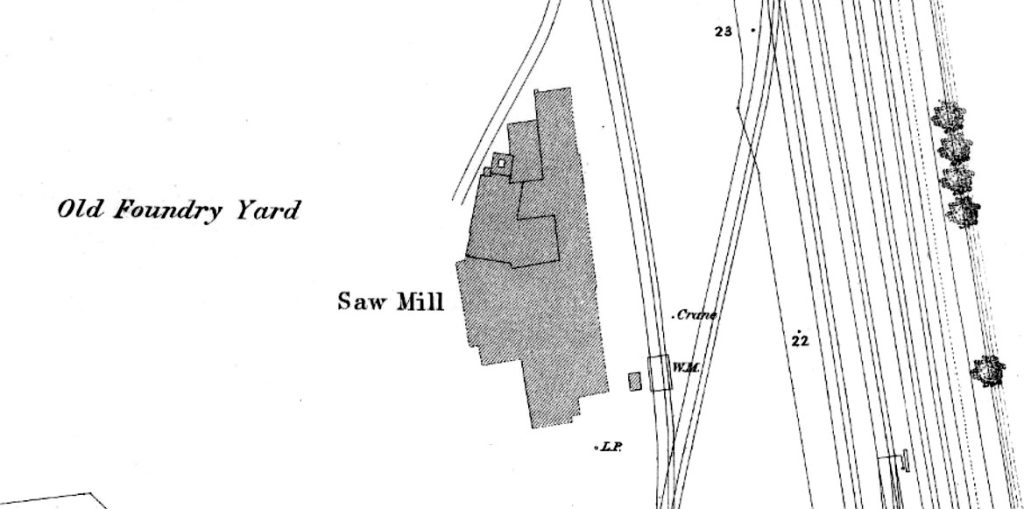
1881: Sale of the foundry land in April, with the new owner selling the remaining materials and machinery of the company in September (West Somerset Free Press, 3 September 1881). Thereafter the site became Bowerman’s sawmill.
1905: Death of Richard Charles Else. The Western Daily Press of 2 January 1905 reported:
DEATH OF MR R. C. ELSE, OF BRIDGWATER.
A PROMINENT FREEMASON.
The Freemasons throughout the province of Somerset will learn with deep sorrow of the death which occurred on Saturday morning last, at Clifton, at the advanced age of 81 years, of Mr Richard Charles Else, J.P. of the county of Somerset, and an ex-mayor of Bridgwater, but who was best known as a distinguished and much beloved Freemason, having for upwards of a quarter of a century occupied the position of Deputy Provincial Grand Master, and being also a Past Grand Deacon of England. After leaving Bridgwater (where he occupied Binford House, now to be utilised as a free library, towards which Mr Carnegie has given the sum of £3,500) Mr Else came to reside at Binford House, Victoria Square, Bristol, where his wife died about two years ago, bequeathing the sum of £2,000 to the Bridgwater Infirmary. About a year ago he changed to apartments at 18, West Mall, Clifton, where he became much invalided, being confined for the most part indoors, though he continued to take considerable interest in Masonic matters, especially in connection with the charities. He had only been obliged to keep to his bed a few days, suffering, it was thought, from a slight attack of influenza, and his death, which occurred about six o’clock on Saturday morning, came as a surprise. He was perfectly conscious up to the last, and passed away very peacefully.
The deceased gentleman, who was an engineer by profession, and was associated with Mr Brunel in the construction of the Bristol and Exeter Railway, and also the Saltash Bridge, was Mayor of Bridgwater in the Jubilee year (1897), and had the honour of being presented to Queen Victoria. In Bridgwater he had also filled the positions of President of the Conservative Association, and chairman of the School Board. In 1887 he married the widow of Mr Richard Smith, solicitor, of Bridgwater, P.P.G. secretary of Somersetshire Freemasons, and was then presented by his Masonic brethren with a silver centre piece of Masonic design, together with an album containing the signatures of all the subscribers. The brethren of the “Rural Philanthropic” lodge, No. 291, at Highbridge (his mother lodge), also presented him with a silver salver.
Early in 1902, on account of physical infirmity, Bro. Else resigned the exalted position of D.P.G.M. of Somerset, and on the 23rd of November in that year, at a unique and large gathering of the brethren of 291, held as a lodge of emergency, by special permission at the Masonic Hall, Bristol, a further presentation was made to Bro. Else in the shape of a detailed and interesting history of Freemasonry in Somerset (compiled by Bro. T. F. Norris), with particular reference to his own Masonic career in a specially bound volume; a copy of this, in booklet form, being likewise presented to every brother throughout the province. The volume referred to was dedicated to Bro. Else “as a token of love and esteem, and in commemoration of many years’ service to the province of Somerset and his mother lodge.” The volume contained a sketch of Bro. Else’s Masonic career, which, it was stated, extended over a period of 44 years, he having been initiated in the “Rural Philanthropic” lodge in 1858, and in this lodge he was thrice installed as Worshipful Master.
In 1865 he was appointed Provincial Grand Secretary, and on the death of Captain Bridges in 1875, the Right Hon. Earl of Carnarvon, the M.W. Pro. Grand Master of England, and R.W.P.G.M. of Somerset, appointed him as his deputy, as did also Viscount Dungarvan, who succeeded the Earl of Carnarvon in 1890. During his 37 years’ active service as an executive officer of the province, Bro. Else consecrated four lodges and installed as many as 594 worshipful masters of lodges. In the year 1882 the Grand Master of England (H.R.H. the Prince of Wales, now King Edward VII.) conferred upon Bro. Else the high honour of Grand Deacon of England. In connection with the Royal Arch and Mark Masonry degrees, and as a Knight Templar, Bro. Else was equally distinguished, and his valuable services to Masonic charities, to which he was a very liberal contributor, were very highly appreciated. Since his retirement from active participation in Masonic work, he was presented with the sum of 500 guineas, subscribed by brethren throughout the province, and the whole of this sum he at once determined should be devoted to the purchase of votes (now known as the “Else” votes), to be apportioned between the three Masonic charities.
The funeral, we understand, will take place on Thursday next at 12.30, at the Lyncombe and Widcombe cemetery at Bath, where the remains of Bro. Else’s mother and their relatives are interred.
Other work
The firm also made a weighbridge for Wheal Kingston and North Wheal Kingston Mines in Cornwall (Mining Journal, 3 December 1892).
TW May 2026
Sources
Much of this page was based on Grace’s Guide.