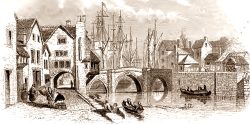
Cecil Sharp was crucial to the preservation and revival of English folk music and dance in the early 20th century. At a time when traditional songs and Morris dancing were fading, he systematically collected, notated, and published them, ensuring their survival. His work helped establish folk traditions as an important part of national cultural identity. Sharp also co-founded the English Folk Dance Society, promoting education and performance. His efforts laid the foundation for the modern folk revival in Britain and influenced similar movements internationally. Sharp visited Bridgwater and collected many songs from the town’s residents, especially around the West Street area.
For an introduction to Cecil Sharpe, see this introductory video. For a list of his Bridgwater singers, see here. For singers from the district, see here. See for comprehensive access to Sharp’s work here.
This video goes into more detail on Sharp’s music theory. David Sutcliffe’s profusely illustrated, and extensive biography of Sharp: Cecil Sharp, collector of folk songs and dances: A new biography, 2022.
Note that where any of Cecil’s singers are noted as being buried in ‘St Mary’s Bridgwater’, that means the Anglican side of the Wembdon Road Cemetery.
BRIDGWATER TOWN AND FOLKSONGS by David Sutcliffe
FOLKSONG COLLECTING IN BRIDGWATER RURAL DISTRICT by David Sutcliffe
Folk Dances
As well as songs, Cecil Sharp was a pioneer of folk dance, recording the steps and the tunes. See here. This most excellent video surveys folk dancing in modern England, see here.
This video is of published historic dance tunes by men like John Playford, who published the “Dancing Master” (first edition: “The English Dancing Master”) is a dancing manual containing the music and instructions for English country dances. It was first published in 1651 by the London-based publisher and composer John Playford. The book had at least 18 editions between 1651 and 1728. Several supplements and continuations were also published during this period. It was compiled for folk who wished to have dances at home with family and friends and not aimed at informal sessions on the village green. See here
See another excellent BBC video here.
Sea Shanties

Statue on Watchet Esplanade (Erected 2008)
Photo by Phil Champion MediaWiki Commons

Sharp collected them at Minehead. Watchet, Bridgwater, Clevedon and Bristol, and more from elsewhere in the country. There were 150 from Somerset, and Yankee Jack, of Watchet, contributed 57.
- A valuable documentary which explains shanties is here.
- Another video of shanties sung without accompanment is here.
- A documentary about shanties filmed at Watchet is here.
Unfortunately there is no video with a comprehensive selection of Somerset shanties, but here a few discovered on You Tube at random.
- Noah’s Ark shanty , Thomas Hole, Clevedon.
- Rosabella, Yankee Jack , Watchet.
- Leave her Johnny leave her, Henry Rapsey, Bridgwater.
- Blow the man down, Henry Rapsey, Bridwater.
- Whiskey Johnny: Thomas Hole, Clevedon.
- What shall we do with the drunken sailor?: James Tucker, Bristol.
TW 22 March 2026